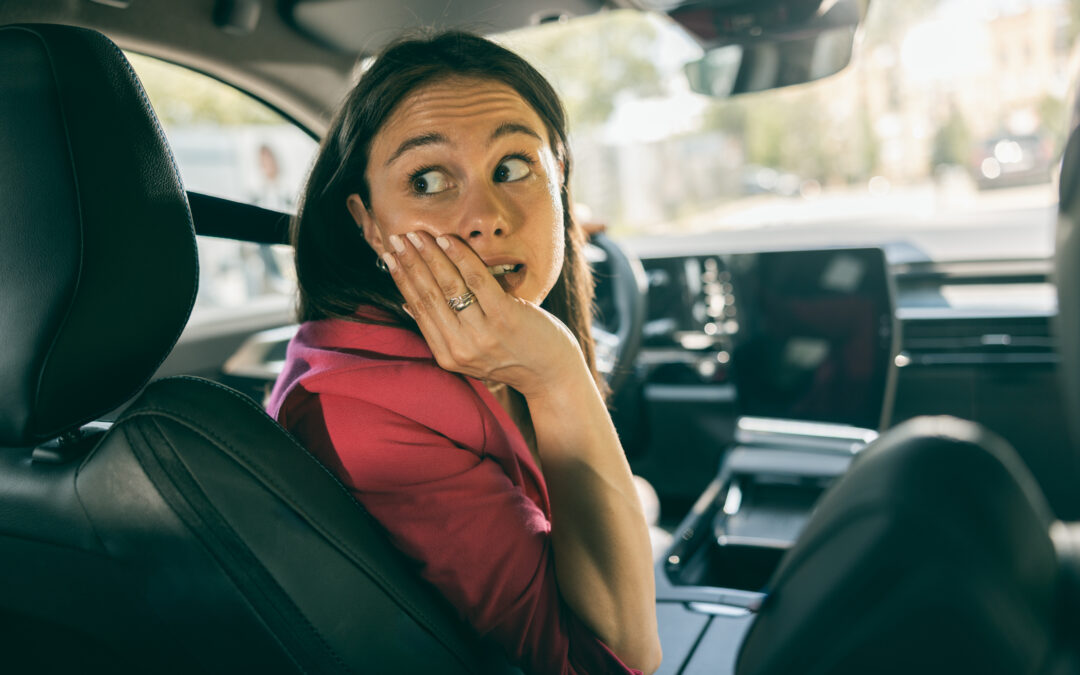
For some people, driving is something they barely think about. They get into the car, choose a route, and go where they need to go without spending much time considering what could happen along the way. For someone experiencing amaxophobia, getting into a car can feel very different.
Anxiety may come from driving on highways, crossing bridges, getting caught in traffic, traveling somewhere unfamiliar, or being too far from home. Another person may feel comfortable driving themselves but become intensely anxious when someone else is behind the wheel. Sometimes the fear begins long before the car starts moving, with the mind already imagining the route, traffic, physical sensations, or what might happen if anxiety becomes difficult to manage.
Amaxophobia is a term used to describe a significant fear associated with driving, riding in a vehicle, or both. While the experience can look different from one person to another, it often involves more than simply disliking driving. The fear can begin affecting where someone goes, how far they travel, which roads they take, whether they allow other people to drive, and how much freedom they feel in their everyday life.
What Does Amaxophobia Feel Like?
Amaxophobia does not always look like someone being completely unable to drive. In fact, many people with significant driving fears continue driving regularly. They may have simply become very skilled at arranging their lives around what feels manageable.
Someone may drive comfortably within a familiar area but avoid highways. Another person may take a much longer route because it allows them to avoid a bridge or busy interchange. Someone might only drive during daylight hours, stay close to home, avoid unfamiliar destinations, or feel more comfortable when another person is in the car.
For others, driving anxiety may show up strongly in the body. As they approach a highway entrance or move into heavier traffic, they may notice a racing heart, chest tightness, dizziness, nausea, trembling, changes in breathing, feelings of unreality, or a growing sense of panic. These physical responses can make driving feel increasingly difficult to manage.
The logical part of the mind may understand that the road itself has not suddenly become unsafe. The body, however, may be responding as though something threatening is about to happen. This mind-body disconnect is something I frequently consider when working with driving anxiety from an integrative therapy perspective.
Is Amaxophobia The Same As Driving Anxiety?
 There can be considerable overlap. Driving anxiety is a broad term and may describe anything from mild nervousness in certain driving situations to anxiety that has become very limiting. Amaxophobia is generally used when the fear around driving or riding in a vehicle has become more significant.
The distinction matters less, however, than understanding what is actually happening for the individual person. You do not need to decide whether your anxiety is severe enough to use a particular term before taking it seriously. A more useful question may be whether fear has begun making choices that you would rather be able to make for yourself.
Perhaps you want to visit someone but immediately think about the highway required to get there. You may be interested in a job but become preoccupied with the commute. A weekend trip sounds enjoyable until you think about the drive. Someone offers to pick you up, but being a passenger feels harder than driving yourself.
When decisions begin to revolve around avoiding anxiety, the emotional impact can become much larger than the drive itself.
Amaxophobia Can Look Different From Person To Person
Driving involves many different experiences, which means the fear does not always center on the same thing. Someone may be afraid of:
- Driving on highways or interstates
- Crossing bridges or traveling through tunnels
- Driving alone
- Merging or changing lanes
- Driving beside trucks
- Heavy or stopped traffic
- Driving somewhere unfamiliar or getting lost
- Traveling far from home
- Driving at night
- Having a panic attack while driving
- Becoming dizzy, faint, disconnected, or physically unwell behind the wheel
- Driving in rain, snow, or other difficult conditions
- Not being able to pull over or leave the situation
- Making a mistake that causes an accident
- Other drivers behaving unpredictably
- Riding in the passenger seat while someone else is driving
The details matter because two people can both say, “I am afraid to drive,” while experiencing very different fears underneath. Understanding what the nervous system is responding to can help therapy become much more individualized.
When You Are More Anxious As A Passenger Than As A Driver
Amaxophobia does not always involve being afraid to drive. Some people feel considerably safer when they are the person behind the wheel. Driving gives them control over the speed of the vehicle, how closely they follow other cars, when they brake, which lane they use, which route they take, and whether they pull over.
Sitting in the passenger seat changes that. You may notice yourself watching every movement the driver makes. Perhaps you become especially aware of their speed, braking, lane changes, or distance from other cars. Your body may brace before anything dangerous has actually happened.
This can sometimes create tension with spouses, family members, or friends. The driver may experience repeated requests to slow down or change lanes as criticism, while the anxious passenger may simply be trying to manage an intense feeling of vulnerability.
For some people, the deeper issue is not trusting the driver. For others, it is the experience of having less control when their nervous system already feels highly alert. I explore this particular experience more deeply in Driving Anxiety As A Passenger, Not A Driver.
Sometimes The Anxiety Begins Long Before The Drive
Driving fear can also have a strong anticipatory component. A person may begin thinking about Saturday's drive on Thursday night. They might check the route several times, look at traffic predictions, study alternate roads, monitor the weather, calculate how long they will be on the highway, or imagine where they could pull over if they become anxious.
Some preparation is genuinely useful. Knowing where you are going, allowing enough travel time, checking weather conditions, or planning a stop during a long trip may help someone feel more capable and supported. The difficulty comes when preparation begins turning into an attempt to remove every possible uncertainty.
Even with thoughtful preparation, driving always involves some degree of uncertainty. Traffic patterns can shift, weather conditions may change, and other drivers will make decisions outside of your control. Anxiety may also arise unexpectedly, even when you have carefully planned the route and done everything you can to feel prepared.
The more someone feels that they must know exactly how the drive will unfold before they can handle it, the more frightening uncertainty may begin to feel. This is where anticipatory anxiety can become part of the driving-anxiety cycle.
How Does Amaxophobia Develop?
Sometimes there is a clear experience that appears to change someone’s relationship with driving. A car accident or near accident may leave the nervous system more watchful on the road. A frightening experience with another driver can make being a passenger feel unsafe. Someone may have witnessed a serious accident or experienced a moment when they genuinely believed they were in danger.
The fear may also begin after a panic attack. A first significant panic attack while driving can leave a lasting impression. A person may suddenly notice a pounding heart, dizziness, changes in breathing, or an intense sense of panic while several lanes away from an exit. Even if they arrive home safely, the experience may continue to shape how they feel the next time they get behind the wheel.
For other people, there is no single defining event. Driving anxiety may develop during a period of chronic stress, grief, burnout, health anxiety, emotional overload, trauma, or significant life transition. The nervous system may already be carrying a great deal, and driving becomes one of the places where that heightened sensitivity begins to show itself.
This is one reason it can be helpful to look at the whole person rather than focusing only on the road itself. Driving anxiety may be influenced by stress levels, past experiences, physical sensations, beliefs about safety and control, nervous system patterns, and what else may be happening in a person’s life. Understanding these broader contributors can help make sense of why the fear developed and what may be keeping it active.
When Driving Anxiety Is Connected To Feeling Trapped
 For some people, the most difficult driving situations are not necessarily the ones that seem objectively the most dangerous. Instead, anxiety may become stronger in places where it feels harder to stop, change course, or leave.
Highways, bridges, tunnels, heavy traffic, long distances between exits, or unfamiliar areas can create a sense of being committed to the situation once the drive has begun. A person may feel relatively comfortable on local roads because there are frequent opportunities to turn, pull over, or return home. That same person may become much more anxious on a highway where those options feel less immediately available.
In these moments, the fear may center less on driving itself and more on what could happen if anxiety becomes intense. Someone may worry about having a panic attack, feeling dizzy or disconnected, becoming physically unwell, or needing to get off the road without having an easy way to do so.
The distance from a familiar or reassuring place can also matter. A person may notice that driving feels manageable within a certain radius of home but becomes increasingly difficult as they travel farther away. Others may feel comfortable while traffic is moving and much more anxious once congestion slows or stops.
When this pattern is present, driving anxiety can sometimes overlap with driver agoraphobia particularly when the fear is strongly connected to escape, distance from safety, or the possibility of feeling trapped while anxious.
How Avoidance Can Gradually Make Your World Smaller
Avoidance is understandable when something feels frightening. If avoiding the highway immediately lowers anxiety, taking local roads may bring a sense of relief. Canceling a trip that has been creating anticipatory fear for several days may allow the nervous system to settle, while choosing to drive rather than ride with someone else may feel safer for a person who experiences passenger anxiety. In each case, the choice can provide immediate comfort, which makes it understandable that the person may want to continue relying on it.
The problem is not that these choices are unreasonable. The difficulty is what the nervous system may learn from them over time. Avoiding something frightening can unintentionally reinforce the belief that avoiding it was necessary to remain safe.
As avoidance expands, the boundaries around driving can gradually become more restrictive. A person who once avoided only one highway may begin avoiding several routes, traveling within a smaller radius, or feeling that certain destinations are no longer manageable. Over time, this can lead to traveling less independently, seeing friends or family less often, turning down professional opportunities, or relying more heavily on someone else for transportation.
The emotional impact can include frustration, embarrassment, sadness, dependence, and grief for the freedom someone once had. Driving anxiety is no longer only about driving at that point. It may begin affecting work, relationships, independence, travel, healthcare, social connection, and everyday choices.
How Integrative Therapy Can Help With Amaxophobia
When I work with anxiety, I am interested in more than simply helping someone stop feeling anxious. I want to understand what the anxiety is responding to. What does your mind predict will happen? What happens in your body? When did the fear begin? Which driving situations feel most difficult? What do you currently do to feel safer? Are there memories connected to the fear? Are you afraid of the road itself, or are you afraid of panic, uncertainty, losing control, being trapped, making a mistake, or depending on someone else?
These questions help us understand the larger pattern.
Integrative anxiety therapy may include cognitive approaches that help someone recognize catastrophic predictions and develop a more balanced relationship with fearful thoughts. Somatic work, mindfulness, grounding, and nervous system regulation can support a person’s ability to remain connected to the present when the body becomes activated.
Gradual behavioral work may also be useful. This does not necessarily mean forcing yourself into the most frightening driving situation before you feel prepared. Instead, the process can involve thoughtfully building experiences that allow the nervous system to learn something new.
For one person, that might begin with a familiar road. Someone else may practice driving one highway exit before gradually increasing the distance. A person who fears being a passenger might start with a short ride with someone they trust.
Preparation and pacing matter. At the same time, healing usually requires enough contact with the feared experience for the mind and body to discover that anxiety can rise, change, and eventually settle without requiring immediate escape.
When EMDR (Eye Movement Desensitization and Reprocessing) Or ART (Accelerated Resolution Therapy) May Be Helpful
Sometimes amaxophobia is strongly connected to something that happened in the past. There may have been an accident, a near miss, a frightening panic attack, an experience with a reckless driver, or another event in which someone felt unsafe or powerless. A person can intellectually know that the experience is over while their nervous system continues responding as though something similar is about to happen every time they enter a car.
In these situations, EMDR therapy may be helpful in addressing memories, beliefs, body sensations, or emotional responses that continue to carry significant intensity. Accelerated Resolution Therapy (ART) may also be considered when distressing images, memories, physical responses, or fear connected to a past experience continue to influence present-day driving.
Not everyone with amaxophobia has a specific traumatic memory, and not everyone needs trauma-processing work. For some people, treatment may focus more heavily on panic, avoidance, catastrophic thinking, nervous system sensitivity, uncertainty, confidence, or gradually rebuilding comfort with driving. The approach should reflect the person rather than asking every person with driving anxiety to follow the same path.
What Healing From Amaxophobia Can Look Like
Healing does not have to mean becoming completely relaxed every time you get into a car. Driving requires attention and judgment, and there will naturally be times when greater caution is appropriate. Heavy traffic, difficult weather conditions, or unpredictable behavior from another driver can create genuine stress and require more focus. Feeling somewhat tense or alert in these situations does not mean that anxiety is taking over.
The difference is that anxiety no longer needs to organize so much of your life. You may notice nervousness approaching the highway without immediately changing your route. A bridge may still create some discomfort but no longer feel impossible. You might recognize the first signs of anxiety in your body without interpreting them as proof that something is going wrong.
Over time, you may begin driving farther from home, visiting places that once felt inaccessible, allowing someone you trust to drive, considering opportunities without first calculating the route, or simply getting into the car without spending so much emotional energy preparing for what might happen.
These experiences can gradually create a different kind of confidence. Instead of needing certainty that anxiety will never appear, you may begin trusting that you can respond to yourself if it does. The road may still contain uncertainty, but uncertainty does not have to mean that you are unable to move forward.
If amaxophobia or driving anxiety has begun limiting where you go, how you travel, or how independent you feel, therapy can offer a supportive space to understand the thoughts, nervous system responses, past experiences, and protective patterns that may be contributing to the fear. With the right support, you can gradually build more confidence, flexibility, and freedom around driving. If this blog resonated with you, please schedule a phone consultation to explore whether integrative therapy may be a helpful fit. I provide in-person counseling in my Simsbury, CT office and online for people located in Connecticut, New Jersey, and Vermont.