
If you live with driving anxiety, you already know it’s not “just in your head.” It can be in your chest, your throat, your hands on the steering wheel, the way your eyes scan for danger, the way your stomach drops when you merge or come up on a bridge. For many people, driving anxiety has a very specific flavor: I can’t get out if something happens. Or, what if I panic and lose control? Or, what if I hurt someone?
And because driving is so woven into daily life with work, appointments, school drop-offs, and seeing friends, this anxiety can quietly shrink your world. You might start taking longer routes to avoid highways. You might avoid left turns across traffic. You might skip certain errands unless someone can come with you. You might feel embarrassed about it, or frustrated with yourself, or both.
From an integrative therapy perspective, driving anxiety makes a lot of sense. It’s often a nervous-system pattern that got learned for a reason, and now it’s trying to keep you safe, even if it’s using strategies that feel wildly unhelpful. The goal isn’t to bully yourself into “getting over it.” The goal is to help your system feel safer, more resourceful, and more confident so driving stops registering as a threat. In this post, I’ll walk through how integrative therapy approaches driving anxiety, how we understand what’s happening in the body and brain, how we gently expand your “window of tolerance,” and how modalities like EMDR can help. I’ll also reference the book A Complete Guide To Overcoming Driving Anxiety (by Drive Safely Publishing) as a structured companion for exposure and skill-building between sessions.
What Driving Anxiety Really Is (and Why It Can Feel So Intense)
Driving anxiety usually isn’t about driving itself. It’s about what driving represents to your nervous system: speed, unpredictability, responsibility, being “stuck,” loss of control, and the terrifying idea of having a physical symptom with no easy escape.
From the brain’s perspective, driving stacks a lot of “threat ingredients” on top of each other:
- You’re moving fast.
- You’re surrounded by other fast-moving vehicles.
- You’re responsible for decisions in real time.
- You can’t simply stop wherever you want.
- If you panic, you can’t easily step away.
- Your body sensations (heart rate, dizziness, breathlessness) can feel amplified.
So if your nervous system is already primed for anxiety, or if you’ve experienced panic attacks before, it’s easy for driving to become the place where your body says, “Absolutely not.”
A key thing I tell clients is that their symptoms are not proof that they’re in danger. They’re proof that your nervous system thinks you’re in danger. That distinction matters because it gives us a path forward to help your system relearn safety.
Common Ways Driving Anxiety Shows Up
 Driving anxiety can look different person to person, but a few patterns come up again and again. Some people are fine on local roads but panic on highways, bridges, tunnels, or in heavy traffic. Others fear specific scenarios, such as merging, passing trucks, or driving alone. Some avoid driving at night or in the rain. And some feel anxious before they even start the car, anticipatory anxiety that builds as soon as a drive is on the calendar.
The emotional experience can be just as layered. People often describe:
- Fear of having a panic attack while driving
- Fear of fainting or losing control
- Fear of “getting trapped” in traffic, on a bridge, or on a highway
- Shame about needing help or avoiding certain routes
- Grief over lost independence
- Anger at themselves for not being able to “just do it”
The Anxiety Cycle That Keeps Driving Anxiety Alive
Driving anxiety often sticks around because it runs on a self-protective loop, one that feels logical in the moment, but gradually teaches your brain to stay afraid.
- A trigger happens (highway on-ramp, fast lane, bridge, traffic jam).
- Your body activates (heart races, dizziness, derealization, shortness of breath).
- Your brain interprets sensations as danger (“I’m going to pass out,” “I’ll crash,” “I can’t do this”).
- You escape or avoid (pull off, take side streets, cancel plans).
- Short-term relief happens and your brain learns that avoidance = safety.
- The fear generalizes to more routes, more situations, and eventually more of your life.
Integrative therapy doesn’t judge this pattern. We get curious about it, honor why it developed, and then support you in gently changing it. This often involves working on two things in parallel:
- Bottom-up work: helping your body regulate and tolerate sensations without panicking.
- Top-down work: helping your mind reframe fear thoughts and build confidence through experience.
An Integrative Lens: How Your Nervous System, Meaning, and Memory Shape Driving Anxiety
Integrative therapy asks what’s happening in the body, what’s happening in the mind, and what’s happening in the deeper “stored” layers of experience. Driving anxiety can be connected to:
- A previous accident or near-miss (even if it seems “minor”)
- A panic attack that happened while driving (your brain paired “driving” with “danger”)
- A time in life where you felt trapped, powerless, or responsible for too much
- Chronic stress, burnout, postpartum anxiety, grief, or health anxiety
- A nervous system that’s already running hot, potentially with sleep deprivation, caffeine, hormonal shifts, trauma history
Sometimes the driving fear is the surface symptom, and underneath it is a system that hasn’t felt truly safe in a long time (or has maybe never felt safe). This is where integrative work shines: we don’t only focus on “driving skills.” We help you build safety from the inside out.
How EMDR Can Help With Driving Anxiety
EMDR (Eye Movement Desensitization and Reprocessing) is usually best known for treating trauma, but it’s also a powerful approach for anxiety patterns that are linked to past experiences, panic conditioning, or “stuck” threat responses in the brain.
In the context of driving anxiety, EMDR can help in a few ways:
Processing specific events
If your driving anxiety began after an accident, a scary highway moment, or a panic attack while driving, EMDR can help your brain fully digest what happened. When an experience gets “stuck,” the nervous system can keep reacting as if it’s still happening. EMDR supports the brain’s natural processing, so the memory becomes less activating.
Reducing body-based alarm
Driving anxiety can show up strongly in the body, like a pounding heart, dizziness, flushing warmth, or shaky, trembly sensations. EMDR can reduce the intensity of the body’s alarm response by targeting the original learning and the sensations that got paired with danger.
Rewiring the core belief underneath
Driving anxiety often carries a deeper belief, like:
- “I’m not safe.”
- “I can’t handle it.”
- “I’ll lose control.”
- “Something bad will happen and I won’t be able to escape.”
In EMDR, we don’t just talk about these beliefs; we work with the brain’s processing system to shift them in a way that feels real, not forced.
Building future templates
A part of EMDR work can include “future rehearsal,” which helps your brain and body practice driving scenarios while feeling regulated and resourced. This is especially helpful when you’re rebuilding confidence after avoidance.
EMDR isn’t the only tool, but for many clients, it’s a turning point because it addresses the emotional memory network that keeps the fear alive.
The Role Of Practical Structure: A Complete Guide To Overcoming Driving Anxiety (This is a workbook)
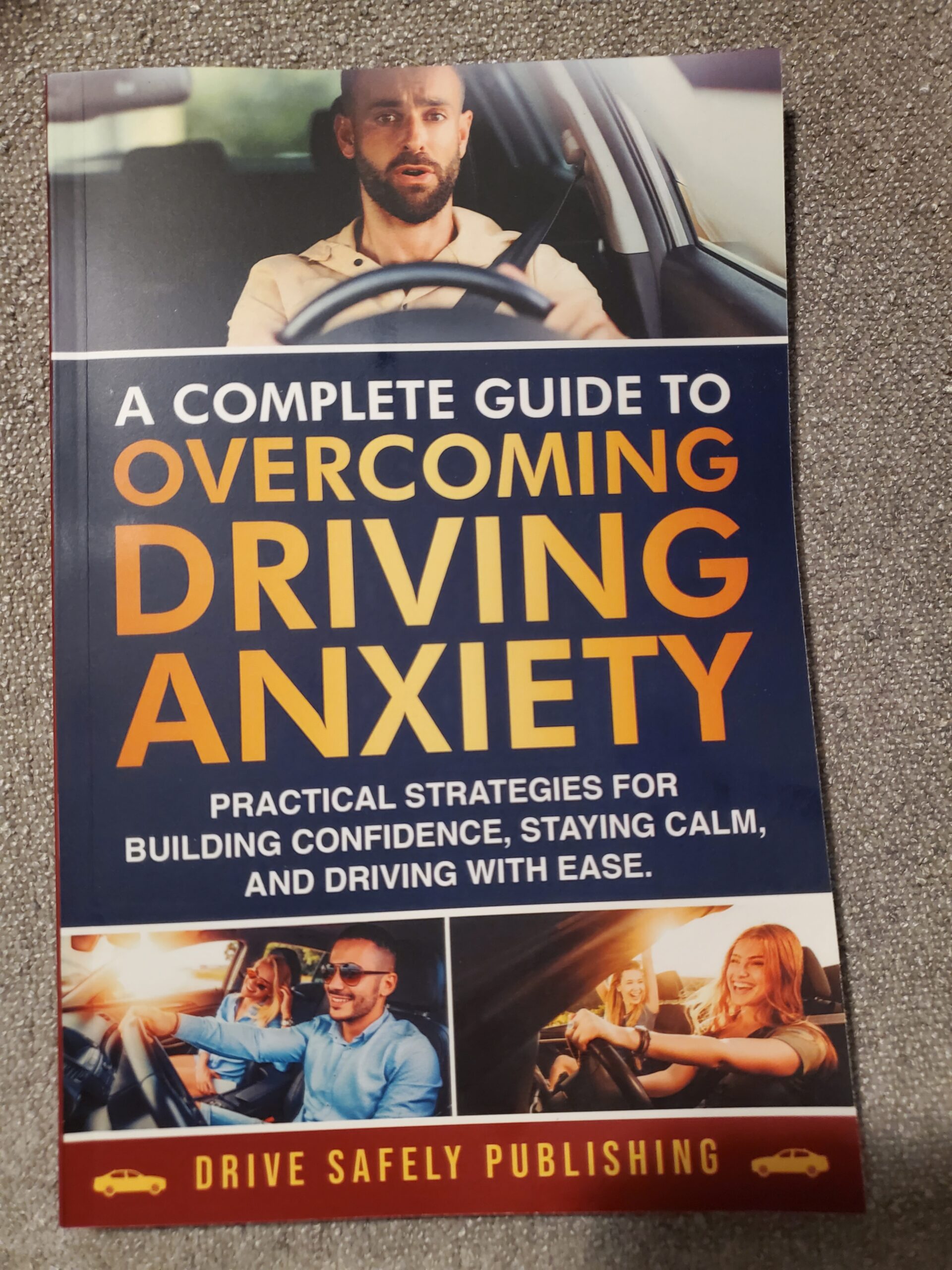 Therapy is powerful, and so is having a clear plan between sessions (if that is something the client wants). That’s where A Complete Guide to Overcoming Driving Anxiety can be helpful. Many people withdriving anxiety feel overwhelmed because they don’t know what step to take first, or they try to leap from “I can’t drive alone” to “I should just force myself onto the highway,” and then it backfires.
A good workbook or guide can offer:
- Psychoeducation that normalizes what you’re experiencing
- A gradual exposure roadmap (step-by-step instead of all-or-nothing)
- Tools to work with anxious thoughts and body sensations
- A way to track progress and notice wins you’d otherwise dismiss
In an integrative approach, we often use resources like this as a supportive scaffold, not as a rigid rulebook. The goal is steady expansion, not perfection.
What Integrative Therapy Focuses On In Anxiety Driving Treatment
1. Building safety in the body first
If your nervous system goes into fight/flight/freeze while driving, it helps to practice regulation skills before you’re on the road. This isn’t about “calming down” as a performance. It’s about teaching your body that activation is survivable and temporary. Depending on the person, this might include:
- Breathing techniques that ease the “can’t get enough air” feeling that often comes with panic
- Grounding and orienting (training your brain to notice present-day safety)
- Gentle interoceptive work (learning you can tolerate body sensations)
- Stabilization and resourcing (especially if trauma is involved)
2. Understanding your unique triggers and meanings
We map the pattern together: what routes, conditions, or moments spike anxiety, and what your brain predicts will happen. Sometimes the fear is very specific (“I’ll faint on the bridge”), and sometimes it’s more diffuse (“I’ll lose control”). When we name the story the nervous system is telling, we can work with it compassionately and strategically.
3. Gradual, well-designed exposure
Exposure isn’t about flooding yourself. In integrative work, exposure is:
- Graded (small steps that build confidence)
- Repeated (your brain learns through repetition)
- Paired with regulation (so your body learns a new association)
- Tracked (so you can see progress over time)
4. Processing what’s underneath (when relevant)
If driving anxiety is linked to trauma, panic conditioning or panic disorder, or a deeper sense of vulnerability, EMDR and other trauma-informed approaches help resolve the root learning. It’s not just about managing the symptoms.
5. Supporting the whole system
Integrative therapy also looks at the factors that make the nervous system more reactive (this can be in collaboration with someone else on your medical team):
- Sleep, nutrition, caffeine, hydration
- Hormonal shifts, postpartum changes, perimenopause
- Medications and supplements (or sensitivity to them)
- Stress load and burnout
- Medical factors worth ruling out (dizziness, vestibular issues, etc.)
This isn’t about blaming your lifestyle. It’s about supporting your physiology so you’re not trying to do hard exposure work on an empty tank.
A Gentle Way To Start
If driving anxiety has been running your life, the idea of “practice driving” can feel like too much. Start with micro-exposures that are almost annoyingly small:
- Sit in the driver’s seat with the car off and practice grounding
- Start the car and notice sensations without rushing to escape
- Drive to the end of the street and back
- Repeat the same short route until your body learns it’s safe
- Add one tiny layer at a time (a slightly busier road, a slightly longer distance)
Progress here is not dramatic. It’s training. You’re teaching your nervous system, through experience, that anxiety can rise and fall without catastrophe. And when you do have a tough moment, we don’t call it failure. We call it information. Then we adjust the plan.
What If I Panic While Driving?
It can be one of the scariest parts of driving anxiety and also one of the areas where you can make meaningful progress. A panic surge is deeply uncomfortable, but it is not dangerous in the way your brain insists it is. The body can’t stay in peak panic forever. The wave rises, peaks, and falls. The goal is to respond differently when it shows up, so your brain stops treating it like an emergency.
In therapy, we often practice:
- Naming the sensations (“this is adrenaline”)
- Loosening the fight with the symptoms (“I can feel this and keep driving safely”)
- Reducing catastrophic interpretations (“this feeling is not a prediction”)
- Creating a safety plan for pulls-offs or pauses that don’t reinforce avoidance
Sometimes we also use EMDR to target the fear of the panic itself. The “meta-fear” that turns a normal spike of anxiety into a full-blown threat response.
What Healing Can Look Like With Anxiety While Driving
Healing doesn’t always mean you never feel anxious again. More often, it looks like anxiety shows up and you still drive. You notice sensations without spiraling, you stop avoiding the places that matter to you, and your world starts expanding again. Over time, you build real trust in yourself behind the wheel.  If you are experiencing driving anxiety, it is limiting you from the way you want to live, and you want to trust yourself behind the wheel, please schedule a phone consult to see if integrative therapy may be a good fit. I can answer any questions about this blog or how I help clients with driving anxiety.

Driving Anxiety As A Passenger, Not A Driver
If you experience driving anxiety as a passenger, you may already know how confusing it can feel. You might be able to drive yourself somewhere and feel relatively okay or even great (because you are in control), but the moment you sit in the passenger seat, your body...

Driver Agoraphobia Explained (A Term My Clients Use)
Driving is often associated with freedom, independence, and the ability to move through life with more ease. It allows you to go where you want to go, when you want to go there. It helps you get to work, see friends, care for your family, attend appointments, take...