
This blog post is not for someone who is newly grieving the end of a romantic relationship and needs time to heal. It is also not for someone who is actively dating and simply has not yet met a person who feels like the right fit. Someone who feels genuinely content and aligned without romantic partnership is also not the intended audience for this post.
There are many meaningful, healthy, and valid reasons a person may be single, and being single does not mean something needs to be fixed. This post is for the person who truly desires partnership, closeness, and emotional intimacy, yet continues to find themselves alone, emotionally guarded, drawn to unavailable dynamics, or unable to let someone come close enough to really know them.
From the outside, hyper-independence can look like competence, strength, and stability. A person may be successful, responsible, self-sufficient, emotionally composed, and able to manage most of life without asking for much from anyone. They may be the person others turn to, the one who handles what needs to be handled, and the one who keeps going even when they are tired. They may have created a life that appears full, steady, and well-managed, with the ability to navigate emergencies, solve problems, make decisions, care for others, meet responsibilities, and continue moving forward even when they feel depleted.
When hyper-independence becomes the primary way a person moves through the world, it can quietly stand between them and the kind of intimacy they most long to experience. A person may want to be chosen, known, held emotionally, and loved with consistency, yet the very protections that once helped them feel safe can make it difficult to soften, receive, trust, and let another person come close.
What Hyper-Independence Can Look Like In Dating
Hyper-independence in dating does not always look like completely avoiding relationships. Sometimes it looks like dating, but never fully letting anyone in. It can look like keeping conversations pleasant but emotionally contained. It can look like being warm, interesting, and engaging, while still protecting the parts of yourself that feel vulnerable, messy, needy, tender, or unsure.
A person may deeply want love, yet feel uneasy when someone genuinely wants them in return. They may long for closeness, but become overwhelmed when another person is emotionally present, consistent, and available. Potential partners who are distant, inconsistent, avoidant, or unavailable may feel familiar because those dynamics allow longing without requiring the same level of vulnerability. At the same time, someone who is steady, kind, and emotionally open may feel unfamiliar, exposing, or even difficult to trust, which can cause interest to fade before the connection has a chance to deepen.
Hyper-independence can also manifest as a strong need to maintain control. A person may find it difficult to let someone else plan, help, initiate, repair, or offer support. They may feel more at ease in the role of the giver, the one who understands, accommodates, manages, and keeps everything moving. Being cared for may feel uncomfortable. Wanting reassurance may feel vulnerable or embarrassing. Sharing hurt may feel too exposing, and asking for clarity may feel like they are asking for too much.
Over time, dating can become a place where the desire for connection and the fear of dependence are constantly pulling in opposite directions.
Wanting Love While Protecting Against It
 One of the painful parts of hyper-independence is that it can create confusion inside a person. They may truly want a relationship. They may imagine having a partner, sharing life with someone, building emotional safety, and feeling deeply known. At the same time, when the possibility of real intimacy appears, their nervous system may respond as if closeness is a threat.
This does not mean the person is broken, incapable of love, or destined to be alone. It may mean their system learned that closeness comes with cost. Somewhere along the way, love may have become associated with disappointment, criticism, engulfment, abandonment, unpredictability, or loss of self. Support may have been inconsistent. Emotional needs may have been minimized. Vulnerability may not have been met with care.
When this happens, a person may not consciously think, “I am afraid of intimacy.” Instead, they may notice themselves pulling away, finding flaws, shutting down, overanalyzing, becoming irritated, feeling trapped, or convincing themselves that they are better off alone. Sometimes the mind creates a very reasonable story for what the nervous system is trying to avoid.
The Difference Between Independence And Hyper-Independence
Healthy independence allows a person to have a strong sense of self. It allows them to make decisions, maintain their identity, enjoy solitude, manage responsibilities, and enter relationships from a place of choice rather than desperation. Healthy independence can strengthen relationships because each person can bring their grounded self into the connection.
Hyper-independence is different. Hyper-independence is often less about preference and more about protection. It can make a person feel as though needing others is dangerous, embarrassing, weak, or unsafe. It can create an internal rule that says, “Do not rely on anyone too much. Do not let anyone see what you need. Do not give anyone enough access to hurt you.”
The problem is not independence itself. The problem is when independence becomes a wall that keeps out support, tenderness, mutuality, and emotional risk.
Romantic partnership asks for a certain level of openness (usually pretty high). It asks a person to be seen, to let someone matter, and to make room for tenderness, trust, repair, misunderstanding, disappointment, and mutual support. For someone who has learned to survive by not needing anyone, these parts of connection can feel deeply unfamiliar and emotionally uncomfortable.
When Self-Protection Becomes Isolation
 Hyper-independence often develops as a wise and protective adaptation. It may have helped a person avoid the pain of being disappointed again, become capable in situations where support was unreliable, and protect themselves from relying on people who could not offer emotional safety. The difficulty is that the same protection can later create loneliness.
A person may become so practiced at not needing anyone that they struggle to recognize their own longing. They may dismiss their desire for partnership by telling themselves they are too busy, too complicated, too independent, too old, too set in their ways, or too much work for someone else. They may convince themselves that relationships are not worth it because they have seen too many examples of disappointment.
Some of those protective thoughts may hold a piece of truth. Relationships do come with risk, people can disappoint us, and love often asks for flexibility, vulnerability, and a willingness to tolerate uncertainty. Yet when hyper-independence takes over, healthy caution can slowly become emotional isolation, making potential connection feel unsafe before it has been given the chance to become something meaningful.
The Pull Toward Unavailable People
For some people, hyper-independence keeps them single by drawing them toward unavailable partners. This can be confusing because the person may feel like they are trying to find love, yet repeatedly end up with people who cannot fully show up.
Unavailable people can feel safer because they do not ask for full emotional surrender. They may create longing without requiring mutual vulnerability. They may allow a person to stay in the familiar role of hoping, proving, waiting, understanding, or managing distance. The relationship may feel intense, but not truly intimate.
Emotionally available people can sometimes feel more unsettling because they offer the possibility of being truly seen, chosen, and met. Their consistency may stir fear, their interest may feel exposing, and their steadiness may feel unfamiliar to a nervous system that has learned to protect itself. Rather than feeling comforted by their presence, a person may notice pressure, suspicion, restlessness, boredom, or an urge to pull away.
This does not mean a person should force themselves to date someone they do not feel connected to. It simply means it can be helpful to notice whether the nervous system is mistaking safety for lack of chemistry and mistaking unpredictability for attraction.
The Fear Of Needing Someone
One of the deeper fears beneath hyper-independence is often the fear of needing someone and then being disappointed, rejected, controlled, or left. For someone caught in this pattern, having needs may feel like giving up power. Depending on another person may feel like opening the door to being hurt. Wanting someone may feel as though they now have too much access to your emotional world.
Dating can become complicated when a person wants connection, yet also fears how deeply that connection could affect them. They may keep part of themselves emotionally distant so that, if the relationship ends, they can tell themselves they were never fully invested. They may avoid naming what they need because the possibility of hearing no feels too painful, or they may leave a relationship early because ending it first feels safer than being the one who is left.
The nervous system may believe it is protecting the person from heartbreak, but in doing so, it may also be keeping them locked out of the connection they say they want.
When “I’m Fine” Becomes A Barrier
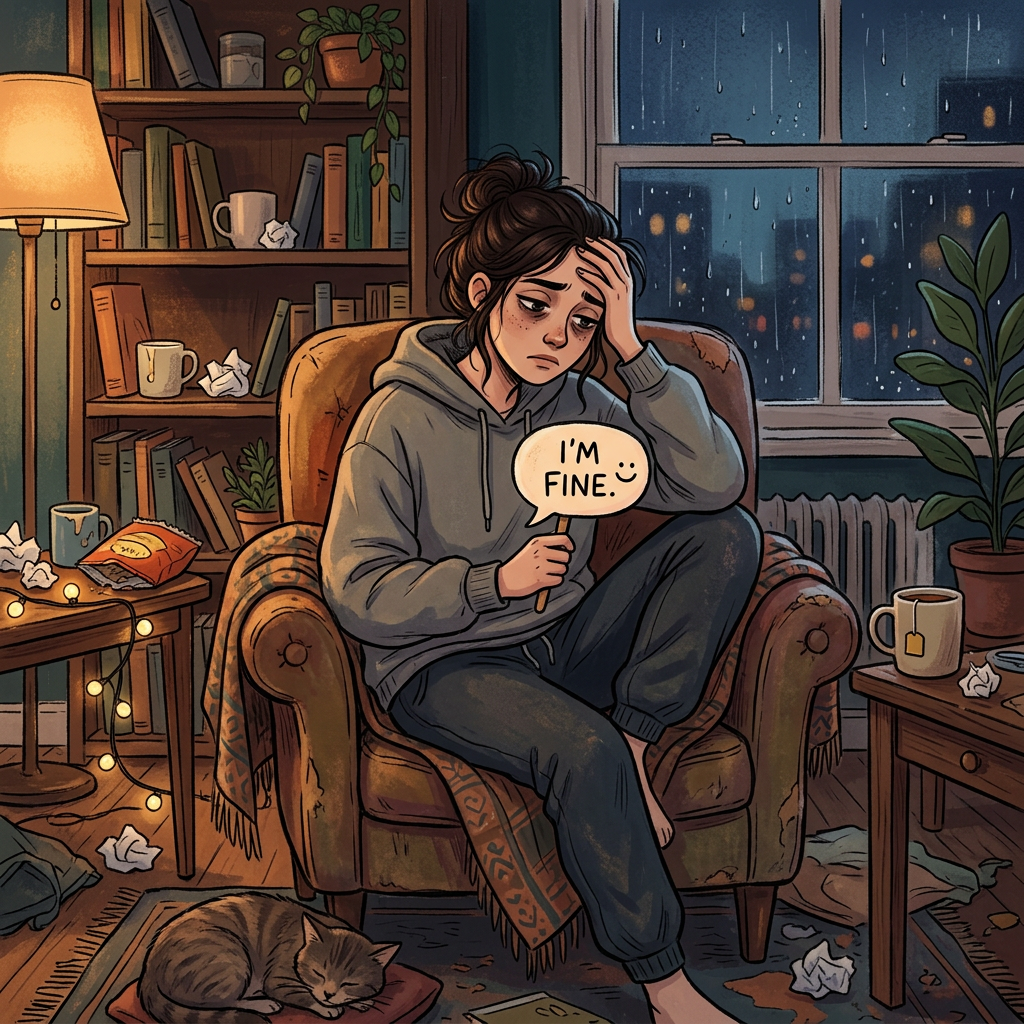 Many hyper-independent people become very good at seeming fine, even when something inside them is hurting. They may be thoughtful, articulate, and emotionally aware when reflecting on life in a broader way, yet have a much harder time naming what they need in the moment. Painful experiences may be described calmly, disappointment may be minimized, and “I’m okay” may come out before they have had a chance to honestly ask themselves if they are.
In dating and relationships, this can make it hard for another person to know how to meet them. A potential partner may not realize they want reassurance, comfort, consistency, or deeper emotional presence. They may assume the person does not need much because the person has learned to communicate that they are easy, low-maintenance, and self-contained.
Over time, this can create a painful dynamic. The hyper-independent person may feel unseen or unsupported, while the other person may not know that support was needed. The longing remains hidden, and the relationship never has the chance to become more emotionally mutual.
Hyper-Independence And High Standards
Sometimes hyper-independence hides behind high standards. Having standards is important. A person should not abandon discernment, ignore red flags, or lower their expectations simply to be in a relationship. Wanting emotional maturity, kindness, consistency, integrity, and shared values is not the problem. The question is whether standards are serving connection or protecting against it.
Sometimes a person has clear, healthy standards. Other times, the mind may search for reasons to disqualify someone before vulnerability becomes possible. A small imperfection may become proof that the person is not right. A normal difference may become a reason to retreat. A slow beginning may be dismissed before anything has had time to develop.
This does not mean every hesitation is fear. Some hesitations are wisdom. The work is learning to tell the difference between discernment and defense.
How Integrative Therapy Can Help
Integrative therapy can help a person understand hyper-independence with compassion rather than shame. The goal is not to make someone dependent, needy, or less capable. The goal is to help them develop more choice. A person can remain strong, grounded, and self-respecting while also learning how to receive care, ask for support, and allow safe intimacy.
This work may involve exploring the earlier experiences that shaped self-reliance. A person may begin to understand when they learned not to need others, what happened when they asked for help, how vulnerability was received, and what relationships taught their nervous system about safety.
Cognitive work can help identify the beliefs that maintain the pattern, such as “I can only count on myself,” “If I need someone, they will have power over me,” “People always leave,” or “I am safer alone.” These beliefs may have once made sense, but they may no longer reflect the life or relationships a person is trying to build now.
Somatic therapy can help a person notice how intimacy feels in the body. Closeness may bring tension, numbness, irritation, anxiety, shutdown, or the urge to escape. These responses are not random. They are important signals from the nervous system. When the body begins to experience safety in smaller, more tolerable ways, connection can become less overwhelming.
EMDR or ART may help when past experiences are still shaping present-day responses. If betrayal, abandonment, emotional neglect, or relational trauma are stored in a way that continues to activate fear, therapy can help the nervous system process those experiences so the present does not feel as threatening as the past.
Relational work can also support new patterns. A person may practice naming needs more directly, tolerating emotional closeness, noticing the urge to withdraw, communicating discomfort, and allowing connection to unfold at a pace that feels safe enough rather than perfectly safe.
Learning To Let Love Be Gradual
 Healing hyper-independence does not usually happen through one dramatic act of vulnerability. It often happens through small, repeated experiences of letting someone in and discovering that the self does not disappear.
This process may begin with answering honestly instead of automatically saying, “I’m fine.” It may involve allowing someone to help with something small, or telling a date that you value consistency instead of pretending you do not care. Sometimes it means noticing the moment you are about to pull away and pausing long enough to ask what part of you feels threatened. Over time, it may also mean letting a kind person be kind without immediately searching for the catch.
These moments may appear small, but they are meaningful. They help the nervous system begin to learn that support does not always lead to danger, and they help the heart experience closeness as something other than a loss of control. Over time, they create space for a person to understand that independence and intimacy do not have to compete with each other. They can exist together.
A Softer Way To Understand The Pattern
If hyper-independence has played a role in keeping you single, it does not mean you have failed at love. It may mean there is a part of you that has been working very hard to protect you. That part deserves to be understood with respect rather than judged, especially if it helped you move through experiences where support was missing, inconsistent, or painful.
At the same time, protection can become lonely when it never has the chance to soften. A life organized around not needing anyone may feel safe on the surface, but it can also begin to feel empty. There may be control, but not much connection. There may be capability, but very little space to feel truly seen.
Healing does not require you to abandon yourself in order to be loved. It does not require you to rush intimacy, ignore your instincts, or force yourself into a relationship that does not feel right. It invites you to slowly build the capacity to stay connected to yourself while allowing another person to come closer.
Independence can be part of who you are, while partnership can still be something you desire. Being capable does not mean you stop needing comfort, and having standards does not mean you have to close yourself off from connection. Protecting yourself may have once been necessary, but it is also okay to wonder whether every wall still needs to remain.
Love does not have to mean losing yourself. With healing, it can become a place where you are known, supported, challenged, respected, and met. Not because you stopped being strong, but because you no longer have to use strength as a substitute for connection.
If this blog resonated with you and hyper-independence is getting in the way of your romantic life, please book a phone consult.

How Hyper-Independence Can Impact Your Work Life
Hyper-independence is often talked about in relationships and personal life, but it can also show up in powerful ways at work. It can shape how a person manages responsibility, communicates with colleagues, responds to stress, receives feedback, asks for help, and...

Hyper-Independence After Trauma: How It Can Affect Couples And Emotional Intimacy
Hyper-independence can look like strength from the outside. It may look like competence, responsibility, resilience, discipline, or the ability to keep going even when life feels difficult. In many ways, hyper-independence often begins as a deeply adaptive response....

Hyper-Independence As A Trauma Response
Hyper-independence can look like strength from the outside. It can look like the person who handles everything, keeps going, figures things out, rarely asks for help, and seems capable in almost every situation. Other people may see them as responsible, resilient,...