
There are people who live with anxiety that comes and goes in clear waves, attached to a specific stressor, decision, major life transition, or event. And then there are people who live with anxiety that feels more woven into daily life. It may not always arrive as panic. It may not even look dramatic from the outside. But it is there in the background, influencing how the day begins, how the body feels, how the mind organizes itself, and how much effort it takes to simply move through ordinary life.
Chronic anxiety often feels less like a moment and more like a climate. It can shape the way someone thinks, sleeps, anticipates, plans, relates, and recovers. Even during calm moments, there may be a sense of waiting for something to shift, go wrong, become urgent, or require attention. Some people describe this as always feeling keyed up. Others describe it as never fully landing in themselves. Some do not even realize how anxious they are until their body begins to protest through fatigue, tension, irritability, headaches, digestive issues, sleep disruption, or emotional overwhelm.
From an integrative therapy perspective, chronic anxiety is not something I view in isolation. I am not only asking what the symptoms are. I am also asking what kind of internal environment a person has been living in for a long time. What has their nervous system adapted to? What have they had to carry? What has felt unpredictable, too much, not enough, or emotionally unsafe? What patterns have helped them get through life, even if those same patterns are now leaving them exhausted? For some people, chronic anxiety is also shaped by chronic fear, where the nervous system holds an ongoing sense of danger even when nothing immediate is going wrong.
That is often where this conversation becomes more compassionate. Chronic anxiety rarely appears out of nowhere. It usually makes sense once we understand the larger story.
Chronic Anxiety Is Not Always Obvious
 Many people living with chronic anxiety are thoughtful, capable, responsible, and high functioning. They may be the ones other people rely on. They may look organized, productive, attentive, and put together. They may rarely “fall apart” in visible ways. But internally, they may be living with a near constant level of tension that others do not see.
Chronic anxiety can show up as overthinking and second guessing. It can look like trouble relaxing, difficulty making decisions, compulsive planning, reassurance seeking, perfectionism, people pleasing, or feeling responsible for everyone else’s emotional state. It can show up in the body as muscle tension, chest tightness, racing heart, nausea, shallow breathing, restlessness, or chronic fatigue. It can also show up relationally, in the form of fear of disappointing people, trouble tolerating uncertainty, difficulty trusting that things are okay, or feeling emotionally “on guard” even in safe relationships.
One of the reasons chronic anxiety can be so confusing is that many people have been living this way for so long that it feels normal. They may say, “This is just how I am,” when in reality their system has simply gotten very practiced at vigilance.
When Anxiety Becomes A Way Of Living
Chronic anxiety often develops when the mind and body stop treating stress as a temporary state and begin treating it as a baseline condition. Sometimes that shift happens after trauma, loss, medical events, burnout, or a prolonged period of overwhelm. Sometimes it begins much earlier in life in environments where there was criticism, unpredictability, emotional inconsistency, pressure, conflict, or not enough support.
When the nervous system spends enough time in a state of bracing, it learns to organize around anticipation. It becomes more efficient at scanning, predicting, preparing, and staying activated. Over time, anxiety can start to feel less like a response and more like an identity. But from an integrative therapy perspective, this is more defined as an adaptation on how to survive or get through life so far.
We then can understand chronic anxiety as something we can understand with care instead of shame. We can begin to ask not what is wrong with you, but what has your system had to learn in order to get you through.
The Integrative Therapy Lens
 An integrative therapy approach to chronic anxiety is grounded in the idea that anxiety is not just happening in thoughts. It is also happening in the nervous system, the body, the emotional world, relationships, and often in the meanings a person has made about themselves and the world around them.
This means I am not only listening for worry. I am also listening for overresponsibility, grief, old fear, attachment pain, burnout, high sensitivity, internalized pressure, and the ways someone learned to survive. I want to know what anxiety protects. I want to understand what the body does when uncertainty appears. I want to know what happens inside when rest is possible, when support is offered, or when control is not available.
For one person, chronic anxiety may be rooted in trauma that has never fully been processed. For another, it may be closely connected to perfectionism and the belief that safety depends on doing everything correctly. For someone else, it may be tied to growing up in an environment where they had to stay emotionally alert in order to stay connected or avoid conflict. For others, chronic anxiety may be intertwined with medical stress, hormonal shifts, sensory sensitivity, parenting stress, or years of functioning in overdrive.
This is why I do not believe in reducing chronic anxiety to a single coping skill or a one-dimensional explanation. There is usually ALOT more going on than that.
How Integrative Therapy Helps
Therapy for chronic anxiety is not about shaming the anxious parts of you or demanding that your body calm down on command. It is about helping you understand what your system has been doing, why it has been doing it, and what it may need in order to feel less burdened by constant activation.
Part of the work often includes nervous system support. That can mean grounding, resourcing, body awareness, pacing, sensory regulation, and learning how to notice activation earlier. It may involve developing a different relationship with physical symptoms so they feel less alarming and less controlling.
Part of the work may also involve identifying the internal rules that keep anxiety going. Rules like I have to get everything right (perfectionism), I cannot let anyone down, I have to stay prepared, I should be able to handle this, or if I let my guard down something bad will happen. These are often not random thoughts. They usually developed for a reason.
When there is trauma underneath the anxiety, deeper work may be needed. EMDR, ART, and other trauma-informed approaches can be helpful in those cases, especially when the body is still reacting as though something unresolved is happening in the present. Sometimes chronic anxiety is not only about current stress. Sometimes it is also about old survival patterns still living in the system.
Cognitive approaches can be helpful too, especially for catastrophic thinking and repetitive worry, but in integrative work I do not want to address thoughts while ignoring the body that is driving them. Real healing usually asks for both.
Chronic Anxiety And Disconnection From Self
 With someone experiencing dissociation and chronic anxiety, the anxiety does not always stay in the realm of activation. Sometimes a person lives with anxiety for so long that the system begins to swing between hyperarousal and shutdown. They may feel flooded one day and numb the next. They may feel intensely restless but also strangely detached. They may feel physically tense while emotionally disconnected.
This is important because chronic anxiety is not always loud. Sometimes it becomes fog, disconnection, difficulty concentrating, or a sense of not fully being here. Sometimes the system is not only anxious. Sometimes it is tired of being anxious.
An integrative perspective helps make space for that complexity. It allows us to hold both the overactivated nervous system and the protective shutdown responses that can develop when the system has been overwhelmed for too long.
What Healing Often Looks Like
Healing from chronic anxiety usually does not mean becoming a person who never feels stress, fear, uncertainty, or vulnerability. It means those experiences stop running your life in the same constant way.
It may look like having more room inside yourself. More space before reacting. More awareness of what is happening in your body. More ability to recover after stress. Better boundaries. Better sleep. Less internal urgency. Less fear of your own thoughts and sensations. More trust that you can handle what is actually here, rather than living in constant preparation for what might happen.
Sometimes healing looks subtle from the outside. You pause before saying yes. You stop overexplaining. You notice your shoulders are tight and soften them. You rest without feeling like you have to earn it first. You feel anxious and do not immediately assume that means something is wrong. You begin to experience calm not as unfamiliar territory, but as something your body can gradually learn to tolerate.
A Gentle Reminder
If you live with chronic anxiety, it does not mean you are weak, too sensitive, or failing at life. More often, it means your system has been working very hard for a very long time. Anxiety may have become one of the ways you learned to protect yourself, stay prepared, stay connected, or keep going.
Integrative therapy can help you understand your anxiety in a fuller way, with attention to both the roots of it and the ways it continues to shape daily life now. It can help you move toward more steadiness, more self-understanding, and more room to breathe inside your own life.
If chronic anxiety has been part of your daily experience, therapy can offer a place to slow down and listen more carefully to what your mind and body have been carrying. If this blog resonated with you, please schedule a phone consult to see if we would be a good fit for your healing journey.


Why Do I Get Stage Fright During Presentations? Understanding Presentation Anxiety
A person can know their material, care deeply about the topic, and be fully capable of presenting it well. Yet as soon as they stand in front of a room, join an important video call, or see their slides appear on a screen, something inside may shift. Their heart...

Medical Anxiety From An Integrative Therapy Perspective
Medical anxiety is something I see with a lot of compassion. It can look like dread before a doctor’s appointment. A racing heart in the waiting room. Trouble sleeping the night before bloodwork or a scan. Going over symptoms again and again in your mind. Avoiding...

Dental Anxiety From An Integrative Therapy Perspective: Helping Your Nervous System Feel Safer In The Dental Chair
If you live with dental anxiety, you probably already know it is not just about “not liking the dentist.” It can show up in your chest, your stomach, your jaw, your breathing, and the dread that starts days before the appointment. For some people, the hardest part is...
Health Anxiety from an Integrative Therapist’s Perspective
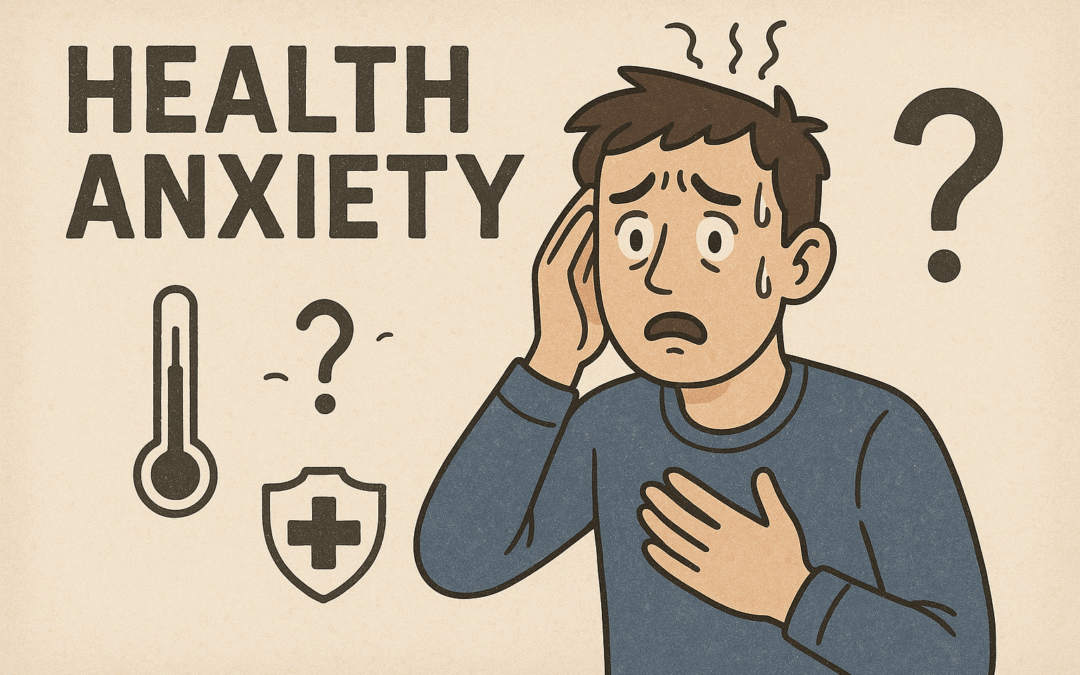
Health anxiety is a common struggle I often encounter in therapy with my clients. It’s more than worrying about health - it’s the persistent fear that something is wrong with the body, despite medical reassurance. It often shows up as relentless symptom checking,...