
Note: This article refers to a traditional Monday through Friday, 9 a.m. to 5 p.m. work schedule because Sunday anxiety is commonly described in that context. However, the same experience can happen for people who work evenings, weekends, rotating shifts, healthcare schedules, hospitality hours, or other nontraditional schedules. The feelings described here may show up before whatever day marks the beginning of your workweek.
Sunday can begin peacefully. There may still be time to rest, spend time with family, take a walk, meet a friend, or simply enjoy being away from work. Yet somewhere along the way, the feeling of the day can begin to change. Thoughts about Monday move into the foreground, and what was supposed to be personal time may slowly become filled with emails, meetings, unfinished tasks, difficult conversations, or the awareness that another demanding week is about to begin.
What is often casually called the “Sunday Scaries” can involve much more than wishing the weekend were longer. It may reflect anticipatory anxiety in which the mind and body begin responding to the workweek before Monday has actually arrived. A person may feel restless, irritable, low, tense, or unable to fully enjoy the remaining hours of the weekend as their attention shifts from rest toward preparation.
When this happens regularly, Sunday anxiety may offer meaningful information about a person’s relationship with work, their nervous system, the pressures they carry, and the environment they are returning to.
Why Does Anxiety Often Begin On Sunday?
Transitions can be emotionally significant, even when they are familiar. Moving from weekend time into the structure and demands of the workweek requires the mind and body to shift from greater personal freedom toward schedules, responsibilities, deadlines, interpersonal expectations, and performance demands.
For someone already experiencing workplace anxiety, that transition may begin long before they arrive at work. The mind may start reviewing everything that needs attention. What do I need to finish tomorrow? Did I forget to respond to that email? What is my supervisor going to say about that project? I have that meeting first thing in the morning. I am already behind.
The person may technically still be in their weekend, yet internally they have already returned to work. Thinking briefly about Monday can sometimes help someone feel organized and prepared. The difficulty begins when preparation turns into hours of rumination, worry, or physical tension without creating any greater sense of clarity.
Instead of helping someone feel ready, the mind may remain caught in a loop of anticipating everything that could go wrong.
When Sunday Anxiety Shows Up In The Body
 The Sunday Scaries are not only experienced through thoughts. The body may begin responding to the approaching workweek as well. Someone may notice heaviness in their stomach, tension through their shoulders or jaw, restlessness, headaches, a racing heart, or difficulty settling as the day progresses.
Sunday night may also bring difficulty sleeping. A person can feel physically tired while their mind remains alert, reviewing the next day’s responsibilities and trying to prepare for everything ahead. Others may experience a quieter form of activation, such as feeling emotionally flat, irritable, withdrawn, or unusually tired. Activities that normally feel enjoyable may suddenly require more effort.
These responses can make sense from a nervous system perspective. If work has become associated with pressure, scrutiny, conflict, overload, or uncertainty, the body may begin preparing for those experiences before the workweek starts. The calendar may still say Sunday, but the nervous system may already be anticipating Monday.
When The Mind Begins Working Before The Workweek Does
One of the more common features of Sunday anxiety is the difficulty of mentally remaining in the weekend. A person may begin thinking about unfinished projects while having breakfast, remember an email that needs a response during dinner, or find themselves mentally rehearsing a meeting while trying to relax in the evening.
Sometimes checking email “just for a minute” feels like a way to reduce uncertainty. Instead, seeing new messages or unfinished work may pull the person even further into the workweek. There can also be a strong desire to mentally solve Monday before Monday arrives.
The mind may review conversations, create lists, anticipate problems, rehearse responses, and prepare for every possible outcome. Although this can create a temporary feeling of control, it may also prevent the nervous system from experiencing genuine time away from work.
Over time, the weekend can begin to feel shorter than it actually is because part of Sunday has already been psychologically absorbed by the week ahead.
How Perfectionism Can Make Sundays Feel More Pressured
Perfectionism can intensify Sunday anxiety because the beginning of a new week may bring immediate awareness of everything that needs to be accomplished. Instead of simply recognizing that there are tasks ahead, a person may feel pressure to begin Monday already organized, productive, responsive, and prepared.
For someone whose sense of competence is closely connected to performance, falling behind may feel especially uncomfortable. Unfinished work can remain mentally active because leaving something incomplete feels irresponsible, while the idea of beginning the week without a clear plan may create even more anxiety.
Rest can become complicated as well. A person may be sitting on the couch Sunday afternoon while part of them believes they should be preparing, catching up, organizing, answering messages, or doing something productive. This can create an uncomfortable middle ground in which they are not fully working, but they are not fully resting either.
Over time, Sunday may begin to feel less like a day off and more like an extended preparation period for Monday.
Sometimes The Anxiety Is About The Workplace
 It is important not to assume that Sunday anxiety is always an internal problem that needs to be managed more effectively. Sometimes a person is anxious because they are returning to a genuinely difficult or toxic environment.
A supervisor may be unpredictable, highly critical, or difficult to communicate with. The workload may be unrealistic, expectations may be unclear, or the workplace may operate in a state of chronic urgency where employees feel pressure to remain constantly available. There may also be conflict with coworkers, job insecurity, ethical concerns, understaffing, or a culture that rewards overwork while offering very little support.
In these situations, Sunday dread may not simply reflect difficulty managing anxiety. It may be an understandable response to anticipating circumstances that have become emotionally exhausting.
This is where workplace mental health counseling can create space to look not only at anxiety symptoms, but also at the larger professional environment. Understanding what is happening within the workplace can be an important part of understanding what the nervous system is responding to.
Sometimes Older Patterns Come To Work With Us
The work environment is only one part of the picture. Earlier experiences can also shape what returning to work represents emotionally and how the mind and body respond as the workweek approaches. Past relationships, previous workplaces, experiences with authority, and long-standing expectations around achievement or responsibility may all influence why the transition back to work feels especially difficult for some people.
Someone who grew up feeling that approval depended heavily on achievement may carry that pressure into professional life. A person who learned to avoid disappointing others may struggle to say no to additional responsibilities, while someone who experienced a highly critical supervisor in a previous position may remain unusually alert around authority even in a different workplace.
Perfectionism, people pleasing, fear of criticism, imposter feelings, financial pressure, family expectations, or beliefs about success can all shape the emotional meaning of work. This is one reason two people in similar roles may experience the approach of a new workweek very differently.
One person may think about Monday briefly and then return to enjoying the day. Another may feel their stomach tighten simply imagining opening their laptop. Present workplace conditions, personal history, nervous system responses, emotional expectations, and current life stress can all interact.
Often the more helpful question is not simply, Is the anxiety coming from me or from my job? It may be, What am I responding to, and what is this anxiety trying to tell me?
When Sunday Anxiety Begins Taking Part Of The Weekend
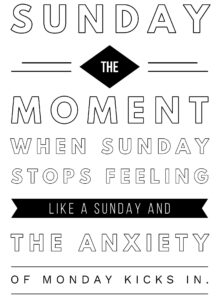 One of the more difficult parts of recurring Sunday anxiety is how easily it can take over time that was meant for rest and restoration. Someone may wake up already thinking, Tomorrow I have to go back, and find that thoughts about work become more frequent as the day continues. By afternoon, they may begin watching the clock, and as Sunday evening arrives, the approaching workweek can start to occupy more and more of their attention.
This can create a frustrating cycle. Work is stressful, so the person needs time away from work to recover. Yet anxiety about returning makes it difficult to experience that recovery fully. The body never receives a clear message that it is truly off duty.
Over time, a person may begin organizing weekends around preparing themselves emotionally for work. Sunday plans become less appealing because there is a sense that they need time to “get ready” for Monday. The nervous system, however, may need genuine separation from work in order to experience rest, connection, pleasure, movement, creativity, or simply unstructured time.
Creating A Gentler Transition Into The Workweek
Reducing Sunday anxiety does not necessarily mean eliminating every thought about Monday. Some preparation can be grounding, particularly when it creates clarity rather than more worry. A gentle transition may begin with noticing what genuinely helps rather than trying to create the perfect routine.
For some people, spending a short, intentional period planning the week can prevent work thoughts from taking over the entire day. Writing down priorities may help the mind stop trying to remember everything, while limiting Sunday email checking or choosing a clear point when preparation ends can create a stronger boundary between personal time and professional responsibilities.
It can also be helpful to notice the difference between preparation and rumination. Preparation leads somewhere. A decision gets made, a task is written down, or something becomes more organized and clear. Rumination, by contrast, tends to circle around the same concern without creating a sense of resolution or helping the person move forward.
Nervous system support also matters. Movement, time outdoors, slower breathing, mindfulness, or connecting with another person can help the body feel more grounded in the present. A comforting meal or a familiar Sunday evening rhythm may also create a greater sense of steadiness as the weekend transitions into the workweek. The intention is not to turn relaxation into another task that has to be done correctly. It is simply to create more room for Sunday to remain Sunday.
When The Sunday Scaries May Be Asking For More Attention
 Occasional anxiety about an unusually difficult Monday is part of being human. A major presentation, performance review, deadline, or challenging conversation may understandably create anticipatory stress. Recurring Sunday dread, however, may deserve a closer look.
If anxiety begins showing up almost every week, disrupts sleep, affects relationships, creates noticeable physical symptoms, or makes it difficult to enjoy time away from work, it may be signaling that something deserves more attention. Looking more closely at the pattern can help clarify whether the distress is connected to the work environment, internal pressure, nervous system activation, or a combination of several factors.
Sometimes anxiety therapy can help someone understand why uncertainty, performance, criticism, or professional responsibility creates such intense activation. Integrative therapy can also support deeper patterns that may be contributing, including perfectionism, fear of disappointing others, difficulty setting boundaries, or a nervous system that remains highly alert.
At other times, the anxiety may be reflecting something meaningful about the workplace itself. It can be helpful to consider whether the workload has become unsustainable, whether stronger boundaries are needed, or whether leadership and workplace dynamics are contributing to ongoing stress. A person may also begin questioning whether the role and environment continue to support their emotional well-being. That does not automatically mean leaving. It means becoming curious about what the distress may be communicating rather than assuming it simply needs to be pushed away.
Does Sunday Anxiety Mean It Is Time to Leave Your Job?
Not necessarily. When someone has spent weeks or months dreading the beginning of the workweek, leaving can begin to feel like the obvious solution. In some situations, changing jobs may ultimately be an important and healthy decision.
Significant anxiety, however, can also make major decisions feel unusually urgent. When the nervous system is exhausted or highly activated, the mind may become focused on immediate relief. Staying can feel unbearable, while leaving may appear to be the only way to feel better.
Before making a major professional change, it can be helpful to understand what is contributing to the distress. Is the role itself no longer a fit? Is the workplace environment harmful or unsustainable? Is burnout influencing how everything feels? Are older fears or perfectionistic patterns being activated? Would some of the anxiety potentially follow into another workplace?
As I discuss in the blog, Are You In The Right Emotional State To Make A Career Decision, emotional distress does not make concerns about work invalid. Understanding your emotional state can simply provide more information about what is influencing the decision and what kind of change may truly support you.
Moving away from something painful may sometimes be necessary. Becoming clearer about what you need, what is no longer sustainable, and what you would like to move toward can help the next decision feel more intentional.
Understanding The Sunday Scaries Through An Integrative Lens
The Sunday Scaries are rarely just about Sunday. They may involve anxiety, depression workplace dynamics, perfectionism, professional identity, nervous system responses, personal history, relationships, physical exhaustion, boundaries, or beliefs about productivity and success.
An integrative perspective creates room to consider these layers together. For one person, the most meaningful shift may involve learning how to step away from work without guilt. Another may need support responding differently to criticism or authority. Someone else may begin recognizing that their workplace has been asking more of them than they can sustainably continue to give.
Integrative therapy can also help a person become more aware of what happens internally as personal time begins transitioning back toward work. Instead of immediately becoming absorbed in anxious thoughts, they may begin recognizing them earlier, understanding what activates them, and responding with greater steadiness.
Over time, the thought I have work tomorrow may begin to feel less like an immediate call to action and more like a simple awareness of what is ahead. There can be greater space to notice the anxiety without automatically moving into planning, problem-solving, or preparing for every possible difficulty. This can allow the mind and body to remain more connected to the present, with a growing sense that what needs attention can be handled when the workday actually begins.
Allowing Sunday To Feel Like Part Of Your Life Again
 Work may remain an important and meaningful part of your life. It is possible to care about your career, take pride in what you do, and remain committed to your responsibilities without allowing the anticipation of work to consume the final hours of your weekend.
A more sustainable relationship with work may allow Sunday to become part of your personal life again rather than simply the day before Monday. There may still be weeks when anxiety appears, particularly before a demanding meeting, unfinished project, or difficult workplace situation. The difference may be that the anxiety no longer automatically takes over the entire day.
Over time, you may become better able to recognize what genuinely needs attention, what can wait until the workday begins, and when your mind is trying to create certainty that simply is not available yet.
If this blog resonated with you, integrative therapy can offer a supportive space to explore the anxiety, workplace dynamics, perfectionism, nervous system responses, and personal patterns that may be making the transition back to work difficult. I provide counseling from my Simsbury, Connecticut office and online throughout Connecticut, New Jersey, and Vermont. Please schedule a phone consultation to learn more about whether integrative counseling may be a helpful fit.