
There are people who live with anxiety for years without telling many people how much it affects them. They may appear capable, responsible, thoughtful, or even calm from the outside. They get through the workday, show up for the people they love, make difficult decisions, and keep moving. Yet privately, they may be carrying a steady stream of worry, physical tension, self-doubt, overthinking, or fear about what could happen next.
Sometimes the hardest part is not the anxiety itself. It is the meaning a person begins to attach to having anxiety. They may wonder why everyday life feels harder for them than it seems to for other people. They may feel embarrassed that they need reassurance, struggle to relax, or become overwhelmed by uncertainty. They may tell themselves that they should be more grateful, more confident, more resilient, or better able to “just let it go.”
When anxiety starts to feel like evidence of a personal flaw, shame can quietly become part of the experience. Rather than simply noticing, “I am anxious right now,” a person may begin to believe, “There is something wrong with me for feeling this way.” That shift can make anxiety far more isolating. It can also make it harder to ask for help, share honestly with people who care, or respond to anxiety with the kind of support that might actually make a difference.
Why Anxiety Can Feel So Personal
Anxiety can affect the body, the mind, relationships, work, decision-making, sleep, and a person’s sense of ease in the world. It may show up as a racing mind before a presentation, a tight stomach before opening an email, a need to think through every possible outcome, or difficulty enjoying a moment that is supposed to feel good. When those reactions happen repeatedly, it’s easy to judge them.
Some people have absorbed the message that being emotionally healthy means always being composed, independent, productive, and in control. If they have been praised for being capable or easygoing, they may feel especially uncomfortable when anxiety makes them feel needy, uncertain, or unable to keep up with their usual pace. Someone who has learned to take care of everyone else may have little practice letting someone see that they are struggling.
Anxiety can also feel deeply personal because it often touches the things that matter most. A person may worry because they care about their relationships, health, work, children, stability, reputation, or future. The concern may be understandable, even when the intensity of the anxiety feels exhausting. Feeling anxious does not mean someone is weak, dramatic, ungrateful, or incapable of handling life. It may mean that their mind and body have become used to staying alert to what could go wrong.
When Anxiety Turns Into Shame
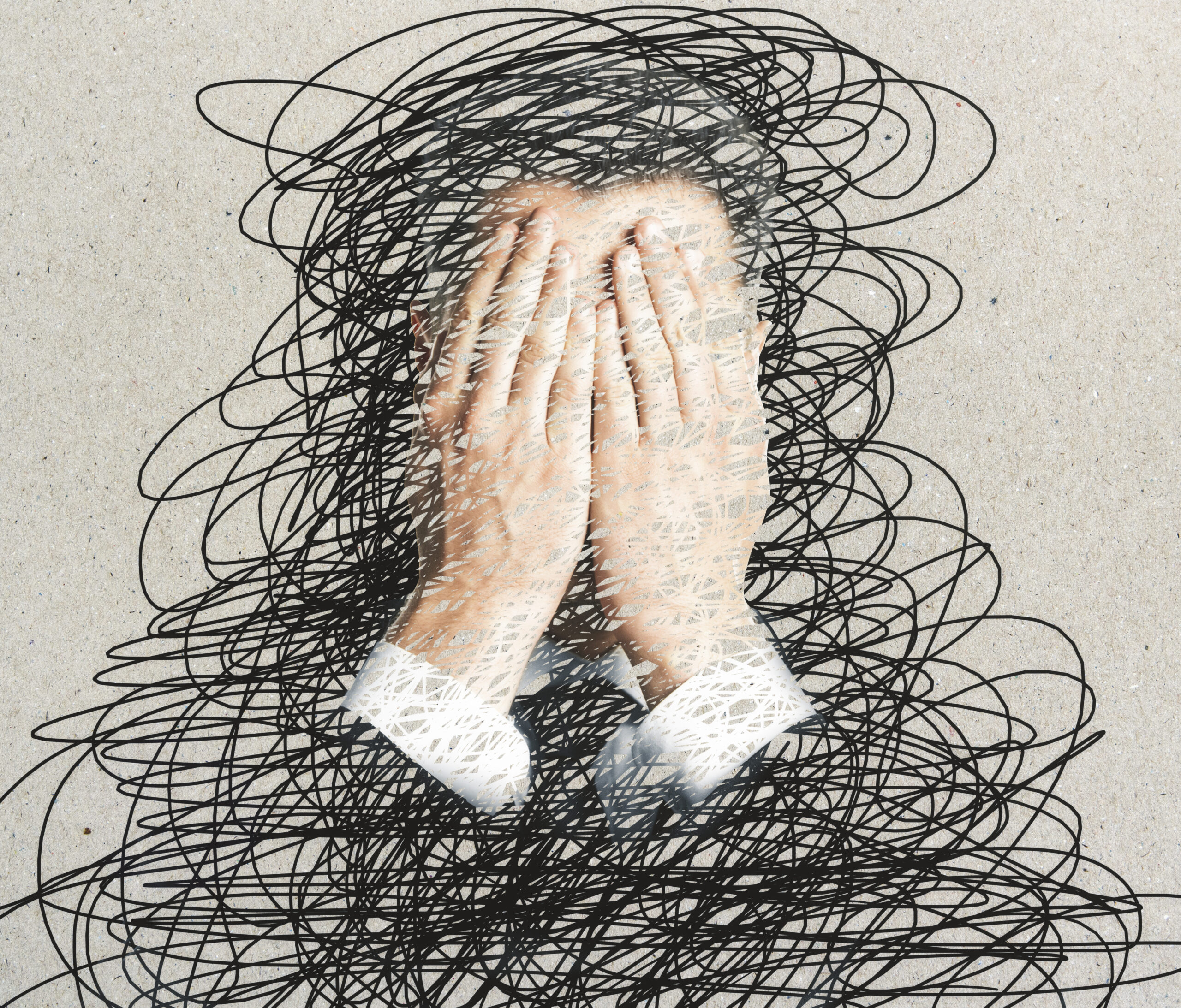 Shame and anxiety are connected, but they are not the same experience. Anxiety often asks, “What if something difficult happens?” Shame asks, “What does it mean about me that I feel this way?” The first response may be focused on uncertainty or danger. The second can become a painful conclusion about a person’s worth, competence, or lovability.
For some people, shame appears after anxiety has been visible. They may feel embarrassed that they cried, needed to leave a situation, asked for reassurance, or could not hide how overwhelmed they felt. That can be especially intense after a panic attack. I have written separately about the shame clients can carry around panic and anxiety attacks, which focuses on the fear and embarrassment that can follow a more acute experience.
Shame around anxiety is not always tied to a visible or acute experience. A person may never have had a panic attack or visibly “fallen apart.” Instead, they may feel ashamed of being an anxious person at all. They may be frustrated by how much mental energy it takes to get through an ordinary day. They may feel guilty for bringing their worry into a relationship or compare themselves to people who appear to take life more easily.
The self-critical thoughts may sound like this:
- “I should be able to handle this by now.”
- “Other people have much bigger problems.”
- “I am making too much of this.”
- “I do not want anyone to have to deal with me.”
- “If people knew how anxious I was, they would see me differently.”
These thoughts can feel convincing, especially when a person has carried them for a long time. They still don’t accurately reflect who someone is. More often, they reflect the pressure a person has learned to put on themselves to feel safe, accepted, competent, or worthy of care.
Where Shame Around Anxiety Can Come From
Shame rarely develops in a vacuum. It may grow from family messages about emotions, cultural expectations around self-reliance, painful experiences of being judged, or environments where vulnerability did not feel welcome. A person may have grown up hearing that they were too sensitive, too emotional, dramatic, difficult, or overreacting. Others learned that worry was normal in their family, but talking openly about it was not.
Some people learned early that they needed to be the steady one. They may have been expected to be responsible beyond their years, to anticipate other people’s needs, or to keep distress to themselves so they would not create more problems. In adulthood, anxiety can then feel like a failure to maintain an identity that once helped them feel secure.
Shame can also be shaped by experiences outside the family. A harsh workplace, a relationship in which concerns were dismissed, social exclusion, a visible mistake, illness, loss, or a period of feeling out of control can all affect how safe it feels to have needs. The mind may learn that being anxious, imperfect, or vulnerable carries a risk of rejection or criticism. It makes sense that a person would then try to hide those parts of themselves.
Understanding where the shame came from is not about blaming a person’s past for everything they feel now. It is about recognizing that self-criticism often has a history. What looks like a harsh inner voice may have developed as an attempt to prevent judgment, disappointment, conflict, or hurt before it could happen.
How Shame Can Keep Anxiety Going
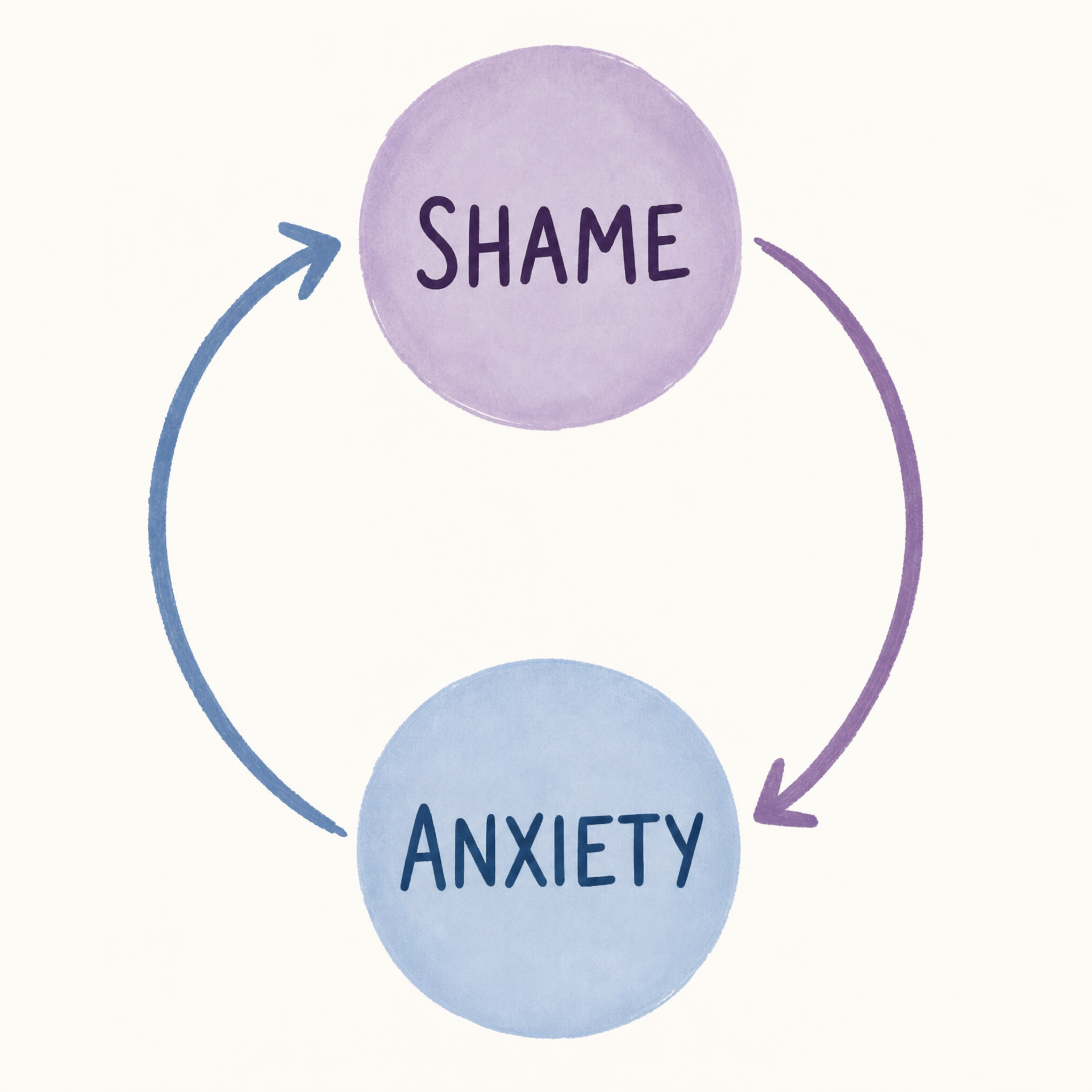 When someone feels ashamed of their anxiety, they may try to outrun it by becoming more prepared, more productive, more agreeable, or more self-sufficient. They may say yes when they need rest, reread messages before sending them, overthink decisions, push themselves to appear fine, or avoid situations where their anxiety might be noticed. These strategies can make sense in the moment because they create a temporary feeling of control.
The difficulty is that hiding anxiety often leaves a person alone with it. There is less opportunity to receive reassurance that is grounded and meaningful, less space to notice what the body needs, and less room to learn that difficult feelings can be tolerated without becoming a source of rejection. The effort of appearing unaffected can become another source of stress.
Shame can also make a person more afraid of the anxiety itself. A racing heart, a tense stomach, or a worried thought may not only feel uncomfortable. It may start to feel like proof that they are failing again. The body becomes activated, the person judges the activation, and the judgment can make the experience feel even more urgent.
This is one reason anxiety and catastrophic thinking can become so closely connected. The mind may not simply predict that a meeting, conversation, or decision will be difficult. It may also predict that anxiety during the experience will reveal something unacceptable about the person. The fear becomes both, “What if this goes badly?” and “What if people see that I am struggling?”
Privacy Is Different From Having To Carry It Alone
Not everyone needs to know the details of a person’s anxiety. Privacy is healthy, especially in relationships, workplaces, or family dynamics where someone has good reason to be selective about what they share. Receiving support does not require full disclosure to everyone.
At the same time, having no place where anxiety can be named honestly can strengthen the belief that it is too much, too embarrassing, or too unacceptable to be seen. A trusted friend, partner, family member, therapist, or support person may be able to offer a different experience. The person can share a little more of what is happening and discover that they do not have to perform perfect calm in order to remain respected or cared for.
For people who experience anxiety at work, the decision about what to share can feel particularly complicated. There is no single right answer. It may help to separate the practical question of disclosure from the internal belief that anxiety makes someone less competent. Anxiety can be present while a person continues to be thoughtful, skilled, reliable, and worthy of professional respect. If work has become a major source of pressure, my article on workplace anxiety may also be useful.
A Whole Person Way Of Understanding Anxiety And Shame
 From an integrative perspective, anxiety rarely develops or persists for just one reason. Thoughts matter, but so do the body, current stress, sleep, relationships, early experiences, work demands, grief, physical well-being, and the meanings a person has learned to attach to needing support. Shame can become attached at any of these points.
Therapy can create room to understand the pattern rather than simply trying to force anxiety away. Cognitive approaches may help a person recognize self-critical conclusions and question whether they are treating a feeling as evidence. Nervous system and body-based work can support the physical activation that makes anxiety feel so immediate. Mindfulness can help a person notice the difference between having an anxious thought and needing to believe or act on it.
When anxiety is connected to painful earlier experiences, repeated humiliation, or a deeply held belief that it is unsafe to be vulnerable, EMDR therapy or Accelerated Resolution Therapy may also be helpful. These approaches can support the processing of memories, beliefs, emotions, and body-based responses that continue to shape how a person experiences anxiety in the present.
An integrative approach also makes room for practical parts of life that may be contributing to an overloaded system. Rest, nourishment, movement, boundaries, medical care when needed, and a pace of life that is more sustainable can all matter. The point is not to suggest that someone can solve anxiety by doing everything perfectly. It is to look at the whole context with curiosity and identify what may help the person feel more supported.
You Do Not Need To Earn Support By Getting Worse
People sometimes wait to seek help until anxiety becomes impossible to hide or begins to interfere in a dramatic way. They may tell themselves that they are still functioning, that they have handled it this long, or that someone else deserves more support. Yet functioning while carrying significant anxiety can be exhausting. It can affect the quality of a person’s relationships, their ability to rest, their confidence in decisions, and their sense of connection to themselves.
You do not have to wait until anxiety begins taking up more space in your life before seeking support. It deserves care and attention before it starts to feel overwhelming, affect your relationships or work, or make it harder to be present in everyday life. Feeling ashamed of anxiety may be a sign that someone has been carrying too much without enough compassion or support.
The work is not to become a person who never feels anxious. Anxiety is part of being human, particularly when life feels uncertain or something important is at stake. A more meaningful shift may be learning that anxiety does not have to decide what you believe about yourself. It can be noticed, understood, and responded to without becoming a verdict on your strength or worth.
When Therapy May Be Helpful
 Therapy may be worth considering when anxiety is leading to ongoing self-criticism, avoidance, reassurance seeking, overworking, difficulty sleeping, relationship strain, or a persistent sense that you have to hide what is happening inside. It can also be helpful when a person understands logically that they are being hard on themselves but still feels unable to step out of the pattern.
Anxiety treatment can offer a supportive place to explore both the anxiety itself and the shame that has become attached to it. Over time, there may be more room to respond to yourself with honesty and care, to make choices from something other than fear of judgment, and to feel less alone with what you are carrying.
If this blog resonates with you, I provide in-person therapy in Simsbury, Connecticut, and online therapy throughout Connecticut, New Jersey, and Vermont. You can schedule a phone consultation to briefly share what it has been like to carry anxiety and the shame that can come with it, ask any initial questions, and explore whether integrative counseling may be a good fit for the support you are seeking.