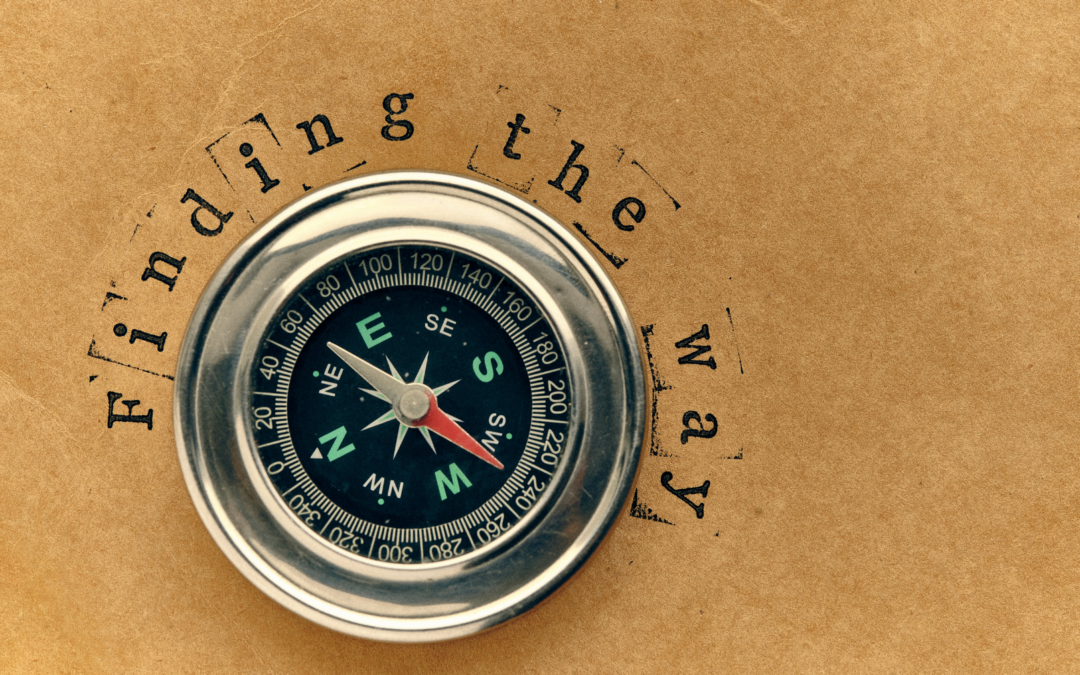
There are seasons in life when direction feels clear. You may know what you want, where you are going, what matters to you, and what next step makes sense. Even if life is not perfect, there can be a sense of movement, purpose, or internal alignment. Then there are other seasons when life direction feels much harder to access.
You may feel stuck, restless, disconnected, uncertain, or quietly dissatisfied, while also not knowing exactly what needs to change. You may look around and feel as though other people have figured something out that you somehow missed. They seem to have a path, a plan, a calling, a career direction, a relationship direction, or a clear sense of identity, while you feel like you are still searching for the thread that is supposed to guide you forward.
Not having life direction can be deeply frustrating because it is not always obvious from the outside. You may still be functioning. You may be going to work, taking care of responsibilities, showing up for your family, answering emails, paying bills, and doing what needs to be done. But internally, there may be a quiet question underneath everything: Is this really the life I want to be living?
For some people, the question feels loud and urgent. For others, it is more subtle. It may show up as boredom, irritability, numbness, anxiety, comparison, low motivation, procrastination, overthinking, or a sense that life is happening around you instead of through you.
What It Can Feel Like To Not Have Life Direction
When someone feels like they do not have life direction, the experience can be hard to explain. It is not always as simple as “I do not know what job I want” or “I do not know what goal to choose.” Sometimes it feels more global than that. It can feel like not knowing who you are becoming, what you care about anymore, what kind of life would feel meaningful, or how to make decisions that actually feel connected to your deeper self.
You may feel pulled in multiple directions at once. One part of you may want change, while another part wants safety. One part may crave growth, while another part feels exhausted by the idea of beginning again. One part may wonder if you are meant for something more, while another part questions whether wanting more is unrealistic, selfish, or too late.
This kind of uncertainty can feel especially painful when you are used to being responsible, thoughtful, high-achieving, or emotionally aware. You may be able to help other people think through their lives, yet feel confused when it comes to your own. You may be someone who has always done what was expected, followed the “right” steps, or made choices based on stability, approval, family needs, financial security, or survival. Then, at some point, you may realize that the path you are on no longer feels fully like yours. That realization can be disorienting.
It can bring up grief for time that feels lost, fear about making the wrong decision, anger that you did not listen to yourself sooner, or shame that you are still trying to figure things out. It can also bring up a kind of quiet loneliness, because not everyone understands the emotional weight of feeling disconnected from your own direction.
People may say things like, “Just pick something,” “You have so much to be grateful for,” “You’re overthinking it,” or “No one really knows what they’re doing.” While these comments may be meant to reassure you, they can also make you feel more alone in what you are carrying.
The truth is, sometimes not having direction is not just about needing a better plan. Sometimes it is about needing to reconnect with parts of yourself that have been ignored, overwhelmed, protected, shut down, or shaped around other people’s expectations for a long time.
The Frustration Of Feeling Stuck
 One of the most difficult parts of not having life direction is the feeling of stuckness. You may know that something needs to shift, but not know what that shift should be. You may make lists, listen to podcasts, research careers, talk to friends, journal, take personality assessments, read self-help books, or think endlessly about your next move, only to end up feeling just as unclear as before.
This can become exhausting. You may start questioning yourself. Why can’t I figure this out? Why do I keep going in circles? Why do I feel motivated for a few days and then lose momentum? Why does every option seem wrong, overwhelming, boring, or impossible?
Feeling stuck can also create a painful relationship with time. You may feel as though you are wasting your life, falling behind, or watching other people move forward while you remain in the same place. Milestones can become emotionally loaded. Birthdays, career transitions, anniversaries, reunions, social media updates, or conversations about other people’s success can all intensify the feeling that you should be somewhere else by now.
Pressure does not usually create clarity. Sometimes pressure makes the nervous system more activated, the mind more crowded, and the body more tense. Instead of feeling inspired, you may feel frozen. Instead of feeling open to possibility, you may feel trapped between too many options or no good options at all.
This is where life direction becomes more than a practical question. It becomes emotional, relational, physical, and sometimes deeply protective.
How Lack Of Direction Can Affect Daily Life
When someone feels unclear about their life direction, it can begin to affect many areas of life. It may influence career, relationships, confidence, mood, motivation, decision-making, physical energy, and even the way a person experiences their identity.
In work or career, lack of direction may show up as boredom, burnout, resentment, underperformance, perfectionism, avoidance, or difficulty making professional decisions. You may stay in a role that no longer fits because leaving feels too risky, or you may move from one job idea to another without feeling grounded in any of them. You may feel capable, but not fulfilled. Successful, but not satisfied. Stable, but not alive in the way you want to feel.
In relationships, feeling directionless can create tension, comparison, or withdrawal. You may feel embarrassed to talk about your uncertainty, especially if people around you seem more settled. You may become more sensitive to advice, criticism, or questions about the future. You may also feel disconnected from others because you are privately carrying a sense of confusion that feels hard to name.
Lack of direction can also affect self-esteem. When you do not know where you are going, it can be easy to interpret that as something wrong with you. You may start believing you are not motivated enough, disciplined enough, talented enough, brave enough, or clear enough. Over time, this can create a painful loop where uncertainty lowers confidence, and lower confidence makes it even harder to take steps forward.
Decision-making can become especially difficult. Even small decisions may feel heavy because they seem to represent something bigger. Choosing one path may feel like closing the door on another. Making a change may feel risky. Staying the same may feel unbearable. You may find yourself over-researching, over-processing, asking for reassurance, imagining every possible outcome, or avoiding decisions altogether.
Emotionally, lack of life direction may contribute to anxiety, sadness, irritability, numbness, restlessness, or a sense of meaninglessness. Physically, it may show up as fatigue, tension, sleep disruption, digestive discomfort, headaches, or a general feeling of being drained. When the mind is constantly trying to solve the question of “What am I doing with my life?” the body can carry that uncertainty too.
Spiritually or existentially, it can bring up deeper questions about meaning, purpose, contribution, identity, and belonging. You may wonder what you are here to do, what kind of life would feel honest, or whether the version of success you have been pursuing is actually connected to your values.
These are not small questions. They deserve care, space, and a more thoughtful process than simply forcing yourself to “figure it out.”
Why Life Direction Can Feel So Hard To Find
 Life direction can feel difficult to find because it is rarely just one thing. It is shaped by temperament, family messages, culture, trauma history, nervous system patterns, financial realities, relationship dynamics, career and educational experiences, grief, and life transitions.
Often, people lose touch with their own direction after years of shaping themselves around the needs, expectations, or comfort of others. Some learned to prioritize achievement over authenticity. Some had to focus on survival, caregiving, stability, or emotional safety, which left very little room for curiosity, play, or self-discovery. Some were criticized, dismissed, controlled, or discouraged when they expressed desire, ambition, creativity, sensitivity, or independence.
Others may have experienced trauma, chronic stress, burnout, loss, medical challenges, relationship wounds, or workplace experiences that changed their relationship with possibility. When the nervous system has been in protection mode for a long time, passion may not feel accessible. Desire may feel muted. Confidence may feel far away. The future may feel threatening instead of exciting.
People often believe they should be able to think their way into clarity. But if the body is bracing, the nervous system is overwhelmed, or old protective patterns are running beneath the surface, insight alone is usually not enough. You may logically know that you want a change and still feel unable to move toward it.
Sometimes the question is not only, “What do I want to do with my life?” Sometimes there are deeper questions, such as:
- What feels safe enough to want?
- What parts of me have I had to silence?
- What dreams did I dismiss because they felt impractical, risky, or unsupported?
- What version of success did I inherit?
- What would I choose if I trusted myself more?
- What is my nervous system protecting me from?
These questions are not always answered quickly, and they do not need to be forced. Sometimes they need room, safety, reflection, and a deeper understanding of what has shaped your choices over time. In integrative therapy, these questions can become part of a meaningful healing process, helping you reconnect with your values, your needs, and the parts of yourself that may have been quieted, protected, or overlooked.
How Integrative Therapy Can Help You Find Life Direction
Integrative therapy can help someone find life direction by looking at the whole person, rather than treating uncertainty as only a mindset issue or a career planning problem. Life direction is often connected to emotional history, nervous system regulation, identity development, values, relationships, work experiences, trauma patterns, and the capacity to take aligned action.
In therapy, the goal is not to pressure you into choosing a path before you are ready. The goal is to help you understand what is happening inside of you, what has been blocking clarity, what parts of you need support, and what kind of life may feel more aligned, grounded, and honest.
This process can include career counseling, workplace mental health counseling, trauma-informed therapy, Eye Movement Desensitization and Reprocessing (EMDR), Accelerated Resolution Therapy (ART), CBT, somatic therapy, and deeper reflection around meaning, values, strengths, and identity.
Career Counseling For Clarity And Direction
Career counseling can be an important part of finding life direction, especially when uncertainty is connected to work, purpose, professional identity, burnout, or career transition. Many people spend a significant portion of their lives working, so when work feels misaligned, it can affect far more than a paycheck. It can affect confidence, mood, energy, relationships, identity, and the way someone imagines their future.
Career counseling can help you explore your strengths, interests, values, skills, personality, needs, goals, and professional patterns. It can also help you understand what has worked for you in the past, what has depleted you, what you may have outgrown, and what kind of work environment may support your mental health and overall well-being.
This process may include exploring questions such as:
- What kind of work gives me energy rather than only taking energy from me?
- What strengths do I use naturally?
- What do I value in a workplace?
- What kind of leadership, structure, flexibility, pace, or environment helps me thrive?
- What career choices have I made from fear, pressure, or expectation?
- What would feel like a more aligned next step?
Career counseling does not usually mean making a dramatic career change. Sometimes it means clarifying what needs to shift in your current role. Sometimes it means gradually exploring a new path. Sometimes it means reconnecting with ambition after burnout. Sometimes it means allowing yourself to want more meaningful work without judging that desire.
How Workplace Stress Can Cloud Life Direction
 Workplace mental health counseling can also be helpful because career uncertainty does not happen in isolation. A person’s relationship with work may be shaped by workplace stress, difficult leadership, toxic environments, chronic over-functioning, perfectionism, imposter feelings, conflict avoidance, burnout, unclear boundaries, or a history of being undervalued.
Sometimes people believe they lack life direction when they are actually emotionally exhausted from the environment they are in. Sometimes they think they need a new career when they first need to understand how workplace dynamics have affected their nervous system, confidence, and sense of possibility. Other times, workplace distress reveals something important about what no longer fits.
Therapy can help you sort through these layers with more clarity. It can help you identify whether the issue is the field, the role, the organization, the culture, the workload, the leadership, the boundaries, or the way old patterns are being activated at work. For example, someone who learned to be highly responsible may repeatedly take on too much. Someone who fears disappointing others may struggle to set limits. Someone with a history of criticism may feel constantly afraid of making mistakes. Someone who has experienced workplace trauma may feel anxious, guarded, or unable to trust their own competence. When these patterns are understood, work decisions can become less reactive and more intentional.
Looking At Whether Trauma Is Blocking Passion
 One of the most overlooked parts of life direction is the role of trauma and emotional protection. Many people assume that if they had a true passion, they would feel it clearly. But passion does not always feel accessible when the nervous system has been shaped around survival, pleasing, perfectionism, vigilance, or self-protection.
Trauma can affect life direction in subtle and powerful ways. It may make visibility feel unsafe, success feel threatening, rest feel undeserved, creativity feel vulnerable, or desire feel dangerous. It may disconnect a person from their body, instincts, preferences, and sense of possibility. It may also create beliefs such as “I can’t trust myself,” “It’s not safe to need too much,” “I should not take up space,” “I have to be practical,” or “If I fail, I will not be okay.”
The issue is not that passion is missing. It may be that fear, grief, shame, old roles, or years of self-protection have made it harder to access.
Integrative therapy can help gently explore what may be blocking access to desire, motivation, and direction. This does not mean forcing someone to uncover a hidden calling or pushing them into big change. It means creating enough safety, regulation, and self-understanding so that more authentic wants can begin to emerge.
Nervous System Regulation With EMDR And ART
When someone feels stuck, overwhelmed, fearful, or disconnected from life direction, nervous system regulation can be an important part of the work. If the body is in a chronic state of fight, flight, freeze, shutdown, or over-control, it can be difficult to access clarity. The mind may want answers, but the body may be focused on protection.
EMDR, or Eye Movement Desensitization and Reprocessing, and Accelerated Resolution Therapy, often called ART, can support the processing of distressing memories, stuck emotional responses, limiting beliefs, and nervous system activation. These approaches can help the brain and body reprocess experiences that may still be influencing present-day choices, even when a person intellectually understands that the past is over.
For someone seeking life direction, EMDR or ART may be helpful when old experiences are connected to fear of failure, fear of success, perfectionism, shame, self-doubt, people-pleasing, workplace trauma, relational wounds, or a belief that it is not safe to move toward what they want.
As the nervous system begins to process and release some of what has been held, a person may feel more internal space. They may feel less hijacked by old fears, less fused with limiting beliefs, and more able to imagine possibilities without becoming immediately overwhelmed. Direction can become easier to sense when the body is not bracing against every possible risk.
CBT And Mindset Work
Cognitive Behavioral Therapy, or CBT, can help with the mindset patterns that often keep people stuck. When someone feels directionless, the mind may become filled with all-or-nothing thinking, catastrophizing, comparison, self-criticism, perfectionism, or fear-based predictions.
Thoughts such as “I’m too late,” “I should already know,” “I’ll make the wrong choice,” “I’m not good enough,” “Other people are ahead of me,” or “Nothing will work out” can make it harder to take meaningful steps forward. These thoughts may feel true, especially when they have been rehearsed for years, but they may not tell the whole story.
CBT can help you identify these patterns, question them, and build a more balanced internal dialogue. This does not mean replacing real concerns with forced positivity. It means learning how to think in a way that is more accurate, flexible, compassionate, and useful.
Mindset work can also support action. Sometimes clarity comes from reflection, but sometimes it comes from movement. CBT can help break large, overwhelming life questions into smaller, more manageable steps. Instead of needing to know the entire future, you may begin by testing one possibility, having one conversation, updating one boundary, researching one path, or practicing one new behavior.
Small steps matter because they create evidence. They help your mind and body learn that movement is possible.
Somatic Therapy And Bottom-Up Processing
Somatic therapy can be especially helpful when life direction feels blocked in the body, not just the mind. Many people try to solve uncertainty through thinking, but the body may be holding fear, shutdown, tension, grief, or disconnection that needs a different kind of attention.
Bottom-up processing means working with the body and nervous system, rather than only working from thoughts down. This may include noticing sensations, tracking activation, developing grounding skills, supporting emotional regulation, exploring body-based patterns, and helping the system feel safer in the present.
For someone who feels directionless, somatic therapy may help reconnect them with internal cues. What feels expansive? What feels constricting? What brings energy? What creates shutdown? What happens in the body when you imagine change? What happens when you imagine staying the same?
These body-based signals are not always simple answers, but they can provide meaningful information. Many people have spent years overriding their bodies, dismissing their needs, or pushing through discomfort. Somatic work can help rebuild a relationship with the body as a source of wisdom, not just a place where anxiety shows up. As the nervous system becomes more regulated, the person may begin to feel more connected to desire, intuition, boundaries, and choice.
Finding Direction Is Often A Process, Not A Single Answer
 Life direction is not always found in one dramatic moment of clarity. More often, it unfolds gradually. It may begin with noticing what no longer fits. Then understanding why it has been hard to change. Then reconnecting with values, needs, strengths, and possibilities. Then taking small steps that help your life begin to feel more like your own.
Direction does not have to mean having a perfect five-year plan. It may mean becoming more honest with yourself. It may mean choosing a next step that feels aligned enough. It may mean learning how to listen inwardly after years of looking outward for permission. It may mean healing the parts of you that learned to stay small, safe, busy, pleasing, or disconnected.
Sometimes finding direction looks like career change. Sometimes it looks like deeper boundaries. Sometimes it looks like grief work. Sometimes it looks like nervous system healing. Sometimes it looks like reconnecting with creativity, rest, relationships, spirituality, ambition, or joy. Sometimes it looks like finally allowing yourself to want what you want without immediately explaining it away.
You do not have to know the entire path before you begin. You only need enough support, safety, and self-trust to take the next honest step.
If you are feeling unsure about your life direction, there is nothing wrong with you. You may not be lost as much as you are in a season of listening more deeply. The frustration, confusion, restlessness, or grief you feel may be pointing toward something that deserves your attention, not your judgment.
Integrative therapy can offer a space to slow down, understand what has been getting in the way, support your nervous system, explore your career and workplace experiences, process old wounds, shift limiting beliefs, and reconnect with a more grounded sense of self. Life direction does not always arrive all at once, but with the right support, it can become clearer, steadier, and more connected to who you are now.
If you are ready to explore what feels next for your life, career, or personal growth, therapy can be a meaningful place to begin. If this blog resonated with you and you are looking to provide direction in your life, please schedule a phone consult today to see if I would be a good fit to help you.