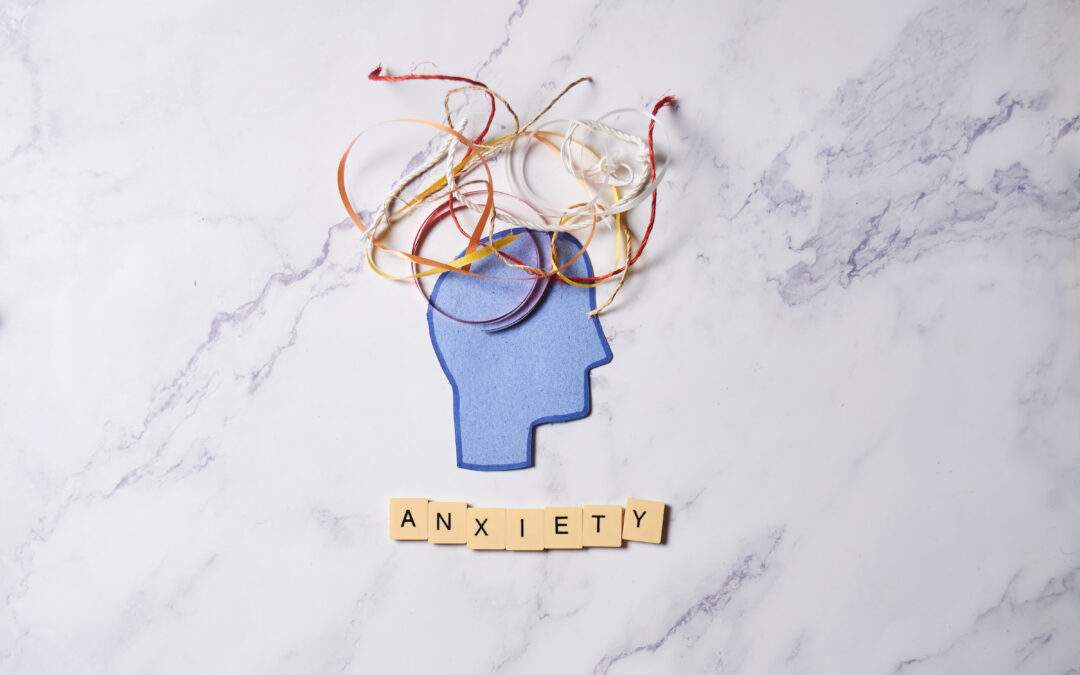
Generalized anxiety disorder can be difficult to recognize because it does not always look dramatic from the outside. Many individuals living with it are high-functioning, responsible, thoughtful, and capable. They may be the ones who manage the details, anticipate needs, and follow through consistently. Internally, however, they may be living with a near-constant state of cognitive and physiological overactivation.
There is often an ongoing undercurrent of worry that is difficult to disengage from. The mind moves quickly toward possible problems, future risks, or unresolved concerns. The body may remain tense even during relatively ordinary moments. Rest can feel difficult to access. Decisions may carry more weight than they objectively require. Even when circumstances are stable, the nervous system may continue to respond as though something important could go wrong.
From an integrative therapy perspective, generalized anxiety disorder is not simply overthinking. It is not a character flaw, a lack of resilience, or a problem of willpower. More often, it is a whole-person condition involving the nervous system, physiological stress responses, developmental experiences, current life stressors, relational patterns, core beliefs, and learned ways of managing uncertainty.
What Generalized Anxiety Disorder Can Look Like
 Generalized anxiety disorder often presents as persistent, difficult-to-control worry across multiple domains of life. The content of the worry may shift over time, but the anxious state itself tends to remain. One concern may quiet down, only for another to quickly take its place.
For some individuals, this pattern is experienced primarily as cognitive overactivity. They may overanalyze decisions, mentally rehearse conversations, anticipate negative outcomes, or repeatedly review situations in an effort to prevent mistakes or regain certainty. For others, the anxiety is just as apparent physiologically. They may experience chronic muscle tension, gastrointestinal discomfort, disrupted sleep, irritability, fatigue, or a persistent sense of restlessness. Many people experience both the cognitive and somatic aspects simultaneously. Over time, this pattern can become so familiar that it is mistaken for personality rather than recognized as a chronic anxiety presentation that meaningfully affects quality of life.
Common features may include:
- Excessive worry across several areas of life rather than one isolated concern
- Difficulty controlling or interrupting anxious thought patterns
- Chronic overthinking, mental rehearsal, or anticipatory scanning
- Muscle tension, stomach discomfort, jaw tightness, or a sense of physical bracing
- Difficulty relaxing, even when external demands are low
- Disrupted sleep due to mental activation
- A strong need for certainty, reassurance, or preparation in order to feel settled
To see a clinical example of Generalized Anxiety Disorder, please read this blog.
The Integrative Therapy Perspective
 When I think about generalized anxiety, I am not only asking what a person is worrying about. I am also asking what is happening in the whole person and what factors may be maintaining the anxiety over time.
I want to understand how the body is responding, how long the nervous system has been carrying this degree of activation, what the individual has lived through, and what current stressors may be contributing to the ongoing anxiety. I am also assessing for patterns such as perfectionism, over-responsibility, people-pleasing, attachment insecurity, unresolved stress, trauma history, and internalized rules about performance, safety, or vulnerability that may be operating outside of conscious awareness.
This matters because generalized anxiety disorder usually makes sense in context. Sometimes a person developed heightened vigilance in response to unpredictability, criticism, instability, or chronic stress. Sometimes they learned early that being prepared, careful, and highly attuned was adaptive. Sometimes they became the person who managed the emotional or practical weight in a family system. In other cases, there may not be one singular explanation, but rather an accumulation of experiences that trained the body to remain on alert.
From an integrative perspective, anxiety is often not random. It has a function. It is frequently rooted in adaptation. Understanding that does not minimize the distress it causes, but it does allow treatment to become more precise, more compassionate, and more clinically useful.
Why Generalized Anxiety Can Become Persistent
Generalized anxiety can become persistent because, over time, it begins to shape the way a person relates to everyday life. The mind becomes increasingly oriented toward anticipating problems, managing uncertainty, and staying mentally prepared. What may have started as a protective tendency can gradually become a more constant internal state.
As this continues, the nervous system may spend more time in activation and less time in genuine rest. A person may become so accustomed to tension, vigilance, and mental over-engagement that these states start to feel normal. Calm can begin to feel unfamiliar, and uncertainty can feel especially difficult to tolerate. This does not mean the person is choosing anxiety. It means the system has become organized around trying to prevent distress, threat, or loss of control.
Another reason generalized anxiety can persist is that it often becomes woven into identity and daily functioning. Many people with chronic anxiety are also conscientious, responsible, and highly attuned. They may be praised for being prepared, thoughtful, or dependable, while the internal cost of that constant vigilance remains unseen. Because of that, the anxiety is not always recognized early as something that needs support.
This is also why generalized anxiety does not tend to shift through self-criticism or pressure. Most people living with it are already putting significant effort into trying to manage their thoughts and hold themselves together. What is often needed instead is a more complete understanding of what is driving the anxiety, what the body has learned, and how to build a greater capacity for regulation, flexibility, and safety over time.
What Generalized Anxiety Is Often Connected To
Generalized anxiety is usually shaped by multiple interacting factors rather than one isolated cause. In clinical work, it is often associated with a combination of temperament, developmental experiences, physiological stress, relational dynamics, and current environmental load.
Contributing factors may include:
- Sensitive or highly vigilant nervous system
- Chronic stress, burnout, or cumulative overwhelm
- Early experiences of unpredictability, criticism, or instability
- Family patterns of anxiety or overfunctioning
- Perfectionism and fear of mistakes
- People-pleasing or chronic over-responsibility
- Unresolved trauma or repeated experiences of overwhelm
How Integrative Therapy Helps
 Integrative therapy helps because it does not reduce generalized anxiety to a single framework. It allows treatment to address cognition, physiology, emotional patterns, developmental history, and current life context at the same time.
Sometimes the work includes identifying the cognitive patterns that maintain anxiety, such as catastrophizing, inflated responsibility, excessive future orientation, or the belief that uncertainty is inherently unsafe. Sometimes it involves slowing the process down enough to observe what the body is doing before the mind accelerates into problem-solving or threat prediction. Sometimes the clinical focus is on helping the nervous system build greater regulation through grounding, somatic awareness, pacing, breathwork, and strategies that support a more stable physiological baseline.
Treatment may also involve exploring deeper origins of the anxiety. If the person’s current anxiety is connected to earlier experiences that remain unprocessed at the level of the nervous system, EMDR, ART may be part of the work. In those situations, therapy is not only about symptom reduction in the present. It is also about helping the system stop responding to current life as though it is still organized around prior danger, instability, or overwhelm.
Clinical goals often include:
- Reducing the intensity and frequency of cognitive spiraling
- Increasing awareness of physiological activation earlier in the cycle
- Improving tolerance for uncertainty without immediate overcontrol
- Decreasing reliance on reassurance, checking, and over-preparation
- Strengthening self-trust and internal regulation
- Creating more flexibility, rest, and choice in daily functioning
A Final Note
If you live with generalized anxiety disorder, there is a good chance you have spent a long time trying to manage life from a place of chronic internal tension. You may appear capable and composed externally while feeling mentally overactivated and physiologically fatigued internally. You may have judged yourself for not being able to relax, or assumed that you should be able to think your way out of what is happening.
It is important to understand that generalized anxiety is not a personal failure. In many cases, it reflects a system that has learned to prioritize vigilance, preparation, and anticipation in response to stress, uncertainty, or earlier experiences of instability. What feels excessive in the present often began as an adaptive effort to maintain safety, predictability, or control.
And even if anxiety has been present for a long time, meaningful change is possible. With appropriate support, individuals can begin to feel less dominated by worry, less physiologically braced, and more able to remain present in their own lives. Therapy can help clarify what is driving the anxiety, what is maintaining it, and how to work with it in a way that is both clinically grounded and emotionally attuned.
If generalized anxiety has been shaping your days in ways that feel exhausting, consuming, or difficult to explain, therapy can help you better understand the full picture and begin responding to it more effectively. If this approach resonates with you, I welcome you to schedule a free phone consultation.